Multi-specialty enterprises need more than a traditional EHR. Learn how a multi specialty EHR helps manage complex workflows, improve efficiency, and enhance patient care.
March 20, 2026
Multi Specialty EHR for Complex Workflows: Why Traditional Systems Fall Short and What Modern Practices Need

Introduction
Healthcare is no longer simple.
Multi-specialty enterprises that include primary care, cardiology, orthopedics, pain management, behavioral health, and other specialties operate in an environment defined by high patient volume, fragmented workflows, and increasing regulatory complexity.
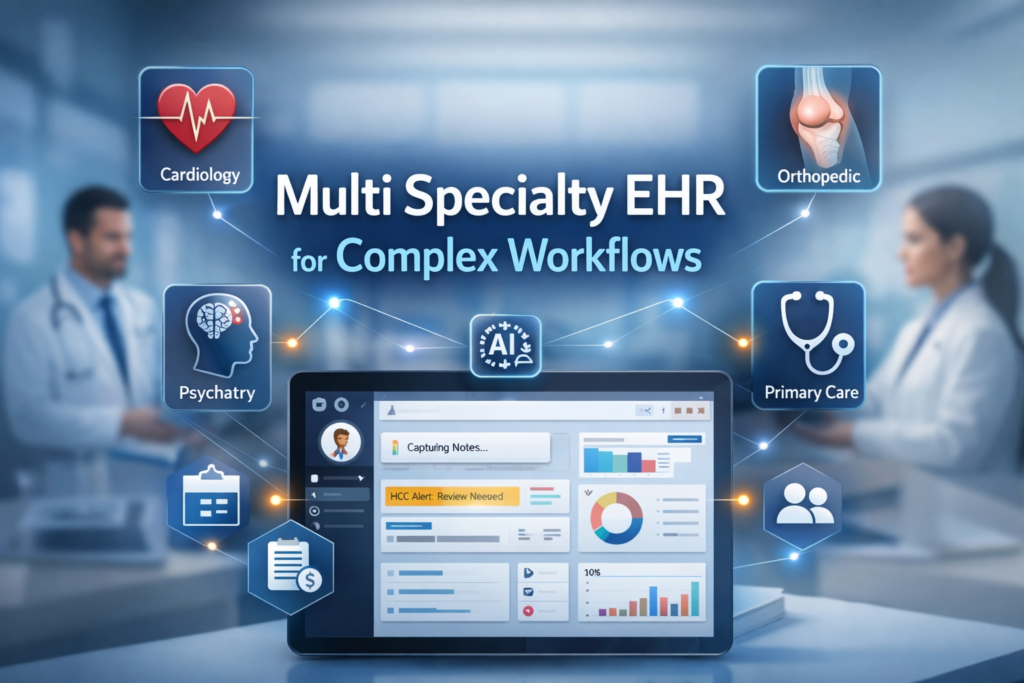
A modern multi specialty EHR must support complex workflows across departments, specialties, and patient touchpoints. Without the right system, coordination becomes harder, documentation slows providers down, and operational gaps begin to affect both revenue and patient care.
In practice, many organizations still rely on legacy systems that were never designed for this level of sophistication. The result is inefficiency, provider burnout, missed revenue opportunities, and a poor patient experience.
Why a Multi Specialty EHR Matters for Enterprise Practices
Multi-specialty practices differ fundamentally from single-specialty clinics.
They must coordinate across physicians, nurse practitioners, physician assistants, and therapists. Each specialty has unique clinical workflows, documentation requirements, and care protocols. Cross-referrals are frequent, and billing models often combine fee-for-service with value-based care.
This level of complexity requires a multi specialty EHR that can adapt to different workflows while keeping the entire organization connected.
Where Traditional EHR Systems Fall Short
One-Size-Fits-All Templates
Legacy systems rely on rigid templates with limited customization. They lack specialty awareness and increase documentation burden. Providers often spend more time navigating the system than focusing on patient care.
Fragmented Workflows Across Departments
Scheduling, clinical workflows, and billing systems often operate independently. For example, referral tracking may be incomplete or manual..
As a result, this creates missed follow-ups, lost revenue opportunities, and gaps in patient continuity. These inefficiencies directly impact both operational performance and patient experience.
Limited Real-Time Intelligence
However, traditional systems primarily store data instead of actively using it.
They do not identify care gaps automatically, highlight missed HCC coding opportunities, or assist meaningfully in clinical decision-making. As value-based care models expand, this limitation becomes increasingly significant.
Inefficient Communication
At the same time, communication challenges arise between front office staff and clinical teams, across specialties, and between providers and patients.
Without integrated tools such as intelligent reception, real-time messaging, and coordinated alerts, practices struggle to maintain alignment and responsiveness.
The Modern Approach: Intelligent, Workflow-Centric EHR
To support enterprise-level complexity, an EHR must function as an intelligent operating platform rather than a passive system.
Specialty-Aware Workflows
Modern platforms adapt to each specialty by offering customized documentation, dynamic workflows, and clinically relevant pathways.
This approach reduces clicks, improves accuracy, and aligns with how providers actually practice medicine.
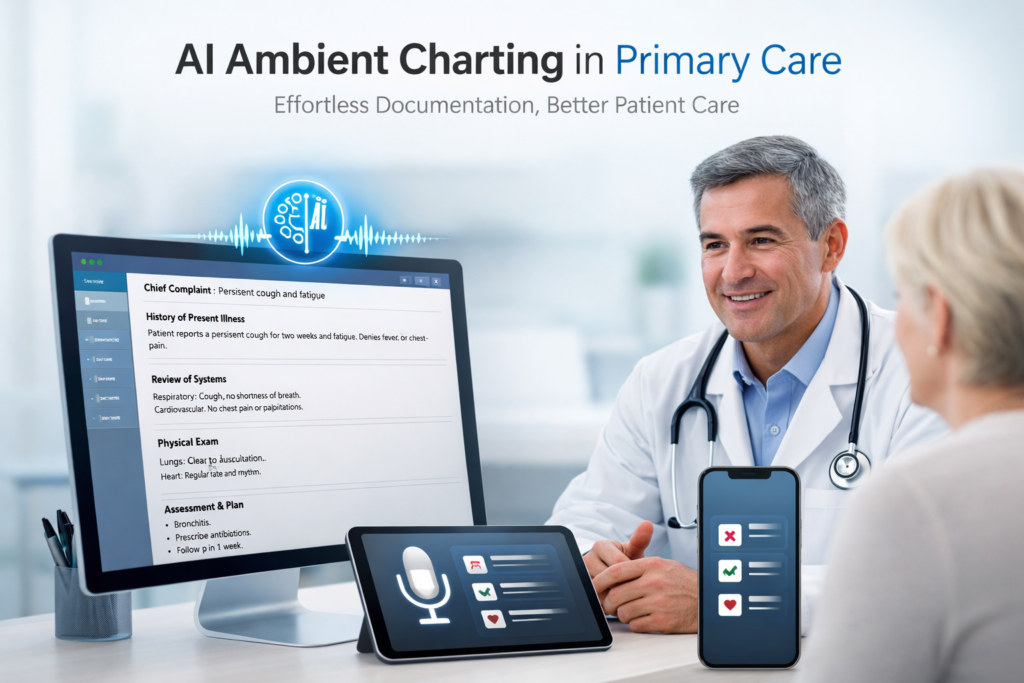
AI-Powered Ambient Charting
Manual documentation is no longer necessary.
Clinical conversations can be captured in real time, and notes are generated automatically. Providers focus on reviewing and finalizing documentation instead of creating it from scratch.
Learn more here:
AI ambient charting in primary care
Unified Operational Platform
A modern multi specialty EHR connects scheduling, clinical workflows, billing, and patient engagement into one coordinated system.
In addition, this eliminates silos and improves efficiency across the organization.
Built-In Value-Based Care Intelligence
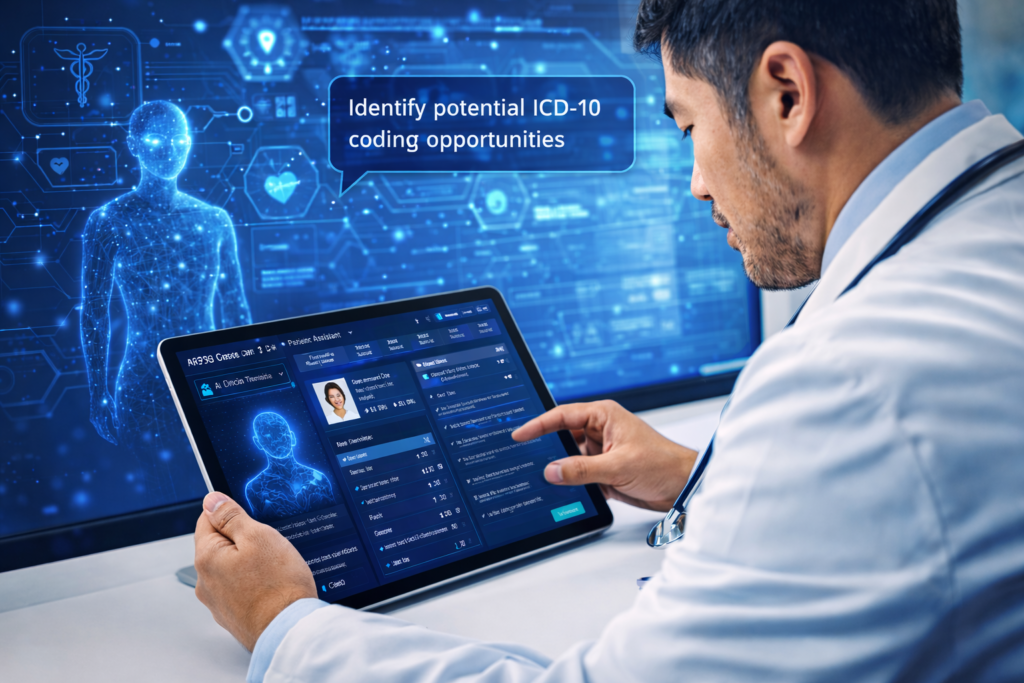
Advanced platforms identify care gaps, suggest HCC and RAF opportunities, and track quality metrics.
Therefore, these capabilities are essential for organizations operating in value-based care environments.
Integrated Patient Engagement
From intake through follow-up, modern systems support automated communication, reminders, and intelligent call handling.
This creates a seamless experience that meets rising patient expectations.
Real-World Workflow: A Multi-Specialty Patient Journey
Consider a typical patient journey within a multi-specialty enterprise.
The appointment is scheduled and routed appropriately. The system prepares the visit by surfacing relevant history and identifying care opportunities. During the encounter, the system captures documentation automatically. The platform routes referrals seamlessly across specialties. Billing and coding are supported with intelligent suggestions. Follow-up communication ensures continuity of care.
This reflects a connected and patient-centered model of care delivery.
How Althea Smart EHR Supports Multi-Specialty Enterprises
Althea Smart EHR is designed specifically for complex healthcare environments.
Explore more here:
AI-powered EHR solutions
The platform combines specialty-aware workflows, intelligent documentation, value-based care tools, and integrated patient engagement.
The result is a system that not only supports operations but actively improves performance.
Conclusion
Multi-specialty enterprises represent the future of healthcare delivery, but they require technology that can handle complexity at scale.
Traditional systems were not designed for this environment.
Modern solutions such as Althea Smart EHR provide the foundation needed to improve efficiency, capture revenue opportunities, and deliver a better patient experience.
Frequently Asked Questions
What is a multi specialty EHR?
A multi specialty EHR is a system designed to support multiple clinical specialties within a single platform while maintaining unified patient records and coordinated workflows.
Why do traditional EHR systems struggle in multi-specialty practices?
They are built using a one-size-fits-all approach and lack flexibility for specialty-specific workflows, which leads to inefficiencies and increased documentation burden.
How does an intelligent EHR improve workflow efficiency?
It automates documentation, improves coordination, provides coding support, and integrates communication tools, reducing manual effort and improving accuracy.
What is ambient charting and how does it help providers?
Ambient charting captures clinical conversations in real time and converts them into structured notes, reducing documentation time and helping providers focus more on patient care.
How does a multi specialty EHR support value-based care?
It identifies care gaps, highlights risk adjustment opportunities, and tracks quality metrics to improve both outcomes and reimbursement.
Can a modern EHR improve patient experience?
Yes. Integrated scheduling, communication, and follow-up processes create a smoother and more responsive patient journey.
What should enterprises look for in a multi specialty EHR?
They should prioritize specialty-specific workflows, intelligent automation, scalability, and strong support for value-based care models.
How does Althea Smart EHR support complex workflows?
Althea Smart EHR provides intelligent workflows, automated documentation, integrated communication tools, and value-based care insights designed for enterprise-level healthcare organizations.
Book Your
Demo Today
Our simple to use, online appointment process makes it easy for you to book for any one of our services and doctors.