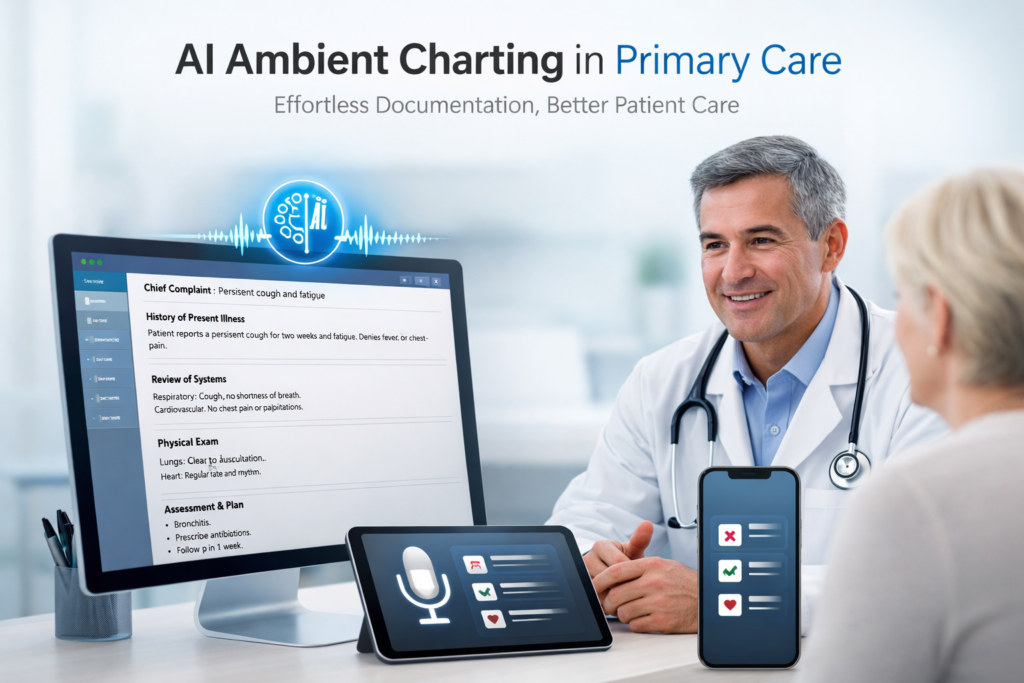
Predictive charting EHR helps primary care practices reduce missed diagnoses, improve RAF score accuracy, and streamline clinical documentation with real-time AI-driven insights.

March 30, 2026
Predictive Charting EHR: Preventing Missed Diagnoses and RAF Score Loss

Missed diagnoses and incomplete documentation represent constant threats inside busy medical clinics. Primary care physicians often rush from one exam room to another. Charting easily falls behind during hectic afternoons. Clinical documentation gaps directly impact patient health and significantly lower annual practice revenue. Industry data shows that missing chronic condition coding heavily penalizes clinics operating under modern reimbursement models. A predictive charting EHR offers a highly practical solution to solve these daily administrative challenges.
Why Missed Diagnoses Still Happen in Modern Practices
Time constraints during brief consultations force doctors to prioritize immediate complaints over comprehensive reviews. Manual documentation creates a heavy administrative burden that drains clinical energy. Fragmented patient data spread across multiple legacy systems makes seeing the complete clinical picture incredibly difficult. Coding inaccuracies frequently occur when providers rely entirely on memory at the end of a long shift.
These daily realities create serious clinical risk for patients. Chronic conditions remain unaddressed or unrecorded. This missing data creates a compounding negative financial impact for the practice. Unbilled complexity means uncompensated care. Relying on outdated manual entry methods guarantees that important clinical details will inevitably slip through the cracks.
Understanding RAF Scores and Revenue Impact
The Risk Adjustment Factor score determines patient complexity within modern healthcare models. Payers use these metrics to calculate the expected cost of caring for specific patient populations. These scores directly dictate reimbursement levels from Medicare and private insurers.
Under-documentation leads directly to artificially low scores. Missing just one chronic condition diagnosis can drastically reduce the funding needed to care for a highly complex patient over a calendar year. Using proper RAF score optimization software helps practices capture the true clinical narrative. Accurate scoring ensures the clinic secures appropriate revenue to sustain quality patient care. Ignoring these metrics puts small to mid-sized private practices at a severe financial disadvantage.
What Is Predictive Charting in EHR
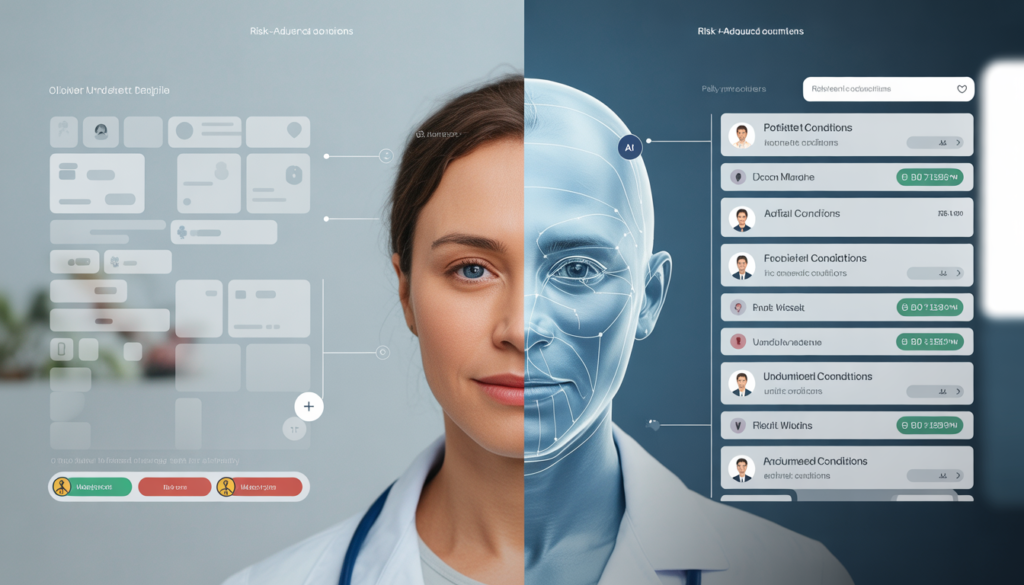
Predictive charting serves as an intelligent background assistant for medical professionals. This AI-driven system automatically suggests relevant diagnoses, appropriate codes, and necessary documentation details in real time.
The technology works by thoroughly analyzing historical patient data. It identifies missing care gaps before the provider even steps into the examination room. The system then gently prompts providers during the actual patient visit. This proactive approach ensures nothing crucial gets left out before the provider officially closes the chart. Doctors receive helpful nudges to address ongoing issues rather than starting from scratch during every single appointment.
How Predictive Charting Prevents Missed Diagnoses
Busy clinicians need structural support to maintain accuracy during high-volume days. Predictive technology provides exactly that by serving as a clinical safety net.
Here is how this advanced technology prevents missed diagnoses:
- Surfaces undocumented conditions based on previous visits and lab results
- Flags potential diagnosis gaps while the patient remains in the exam room
- Suggests relevant ICD codes to perfectly match the clinical narrative
- Ensures complete patient records for better continuity of care across specialties
- Supports clinical decision-making with context-aware prompts and reminders
How It Improves RAF Scores and Compliance
Capturing all relevant conditions accurately remains essential for a financially healthy practice. Predictive features prompt the provider to address and document chronic issues on an annual basis. This consistency improves overall documentation accuracy across the entire patient panel.
Properly detailed charts keep the clinic completely audit-ready at all times. Transitioning to a value based care EHR makes meeting strict payer requirements incredibly simple without adding hours of frustrating paperwork. Practices can align their clinical workflows with billing requirements through integrated practice management support. Clean data entry at the point of care eliminates backend coding struggles and costly claim denials entirely.
Role of AI in Clinical Documentation
Artificial intelligence quietly observes the consultation to reduce the manual typing burden placed on physicians. Ambient listening tools capture the natural conversation flowing between doctor and patient.
Automated note generation instantly creates a highly structured draft. Relying on AI clinical documentation software keeps the provider focused completely on the patient instead of staring at a computer screen. This practical technology significantly reduces physician burnout by eliminating hours of evening computer work. Practices experience faster chart closure times and happier medical staff. The focus shifts back to human connection rather than tedious data entry tasks.
How MD Synergy’s Althea Smart EHR Solves This
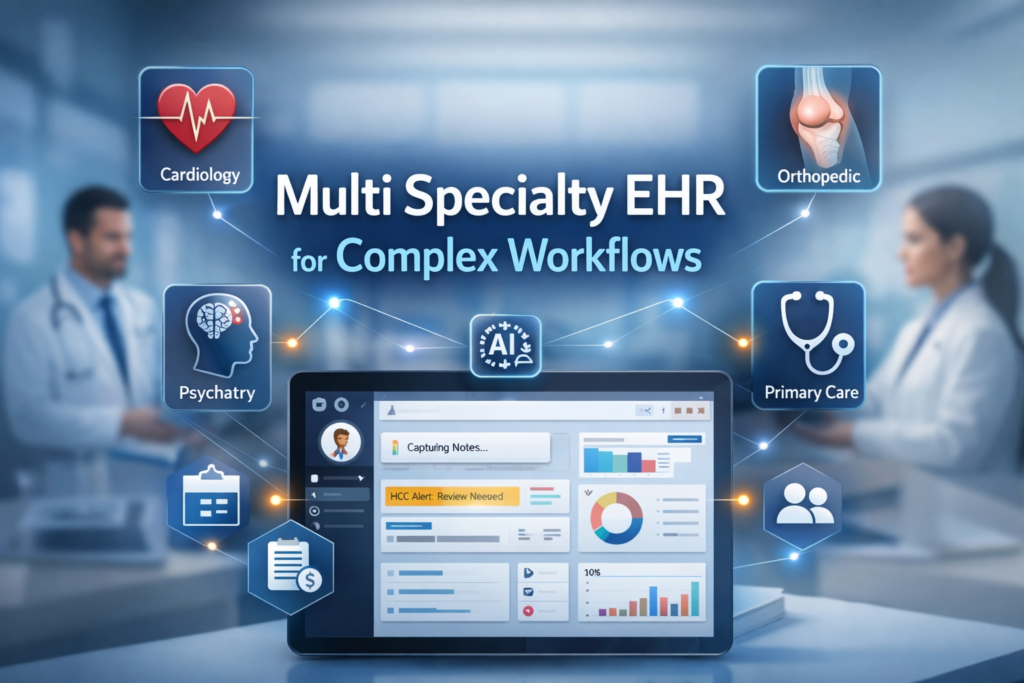
Althea Smart EHR integrates intelligent predictive features directly into the natural clinical workflow. Providers receive real-time documentation support on a true mobile-first platform. Doctors can access complete patient records easily via iPhone or iPad from anywhere.
The platform combines EHR capabilities with a dedicated practice management system that supports billing, along with telemedicine and a patient portal. Clinics can switch to Althea with absolutely zero setup fees and completely free data migration. The intuitive system requires an incredibly short two-hour learning curve compared to weeks of training for legacy systems. MD Synergy requires no long-term contracts. This flexibility removes all financial risk for private practices looking to upgrade their technology.
Why Practices Are Moving Toward Predictive EHR Systems
The ongoing industry shift toward value-based care requires much better technological tools. Increasing compliance pressures from insurance payers demand flawless documentation from every single provider.
Clinics desperately need to maximize operational efficiency without hiring additional billing or coding staff. Modern software handles these complex administrative demands automatically. Implementing smart technology allows doctors to remain doctors rather than functioning as highly paid data entry clerks. Private practices that adopt these tools gain a massive competitive advantage in their local markets.
Securing the Future of Your Medical Practice
Better documentation leads directly to better patient outcomes and healthier clinic revenue streams. Implementing these advanced systems now functions as a strict necessity rather than an optional technological upgrade. Efficient workflows protect both the patient and the financial viability of the clinic.
Explore how predictive charting can support your practice with smarter documentation and improved financial outcomes.
Tags: AI clinical documentationAI in Healthcareclinical workflow automationEHR documentation accuracyelectronic health records AIhealthcare documentation softwaremedical billing compliancemedical coding accuracypredictive charting EHRPrimary Care EHRRAF score optimizationreduce missed diagnosesrisk adjustment factor RAFsmart EHR systemsvalue based care EHR
Book Your
Demo Today
Our simple to use, online appointment process makes it easy for you to book for any one of our services and doctors.