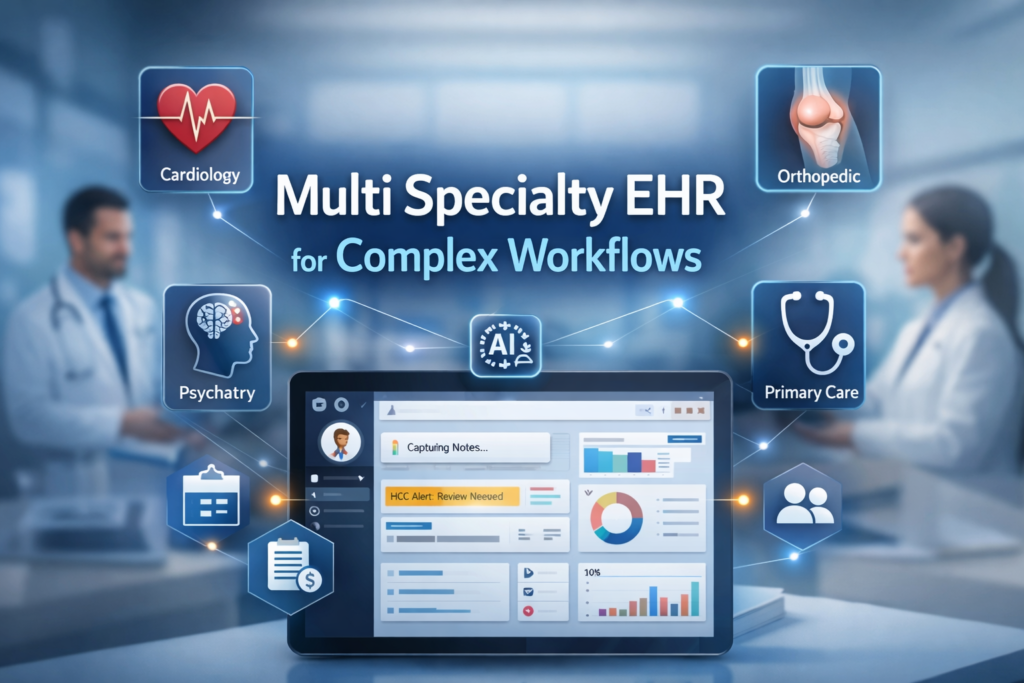
Introduction

Choosing the right Electronic Health Record system has become one of the most important decisions for medical practices today. Many providers feel stuck using outdated systems that slow them down instead of helping them deliver better care.

If you are searching for EHR alternatives, you are not alone. Practices across the country are actively switching to more modern platforms that improve workflow efficiency, reduce documentation burden, and support value based care.

This guide breaks down how to evaluate EHR alternatives, what features matter most, and how newer AI driven platforms are changing the landscape.


Why Practices Are Looking for EHR Alternatives

Healthcare providers are moving away from traditional EHR systems for several reasons.

Common challenges with legacy EHR systems

  • Excessive clicks and time spent charting
  • Poor user experience and outdated interface
  • Limited support for value based care workflows
  • High costs for setup, training, and data migration
  • Difficulty accessing patient data across systems
  • Lack of innovation in AI and automation

Many of these systems were designed years ago and have not evolved to meet modern clinical demands.


What to Look for in an EHR Alternative

When comparing EHR systems, it is important to focus on features that directly impact clinical efficiency and financial performance.

1. Ease of Use and Speed

A modern EHR should reduce clicks and allow providers to complete documentation quickly. Intuitive workflows and mobile access are essential.

2. AI Driven Documentation

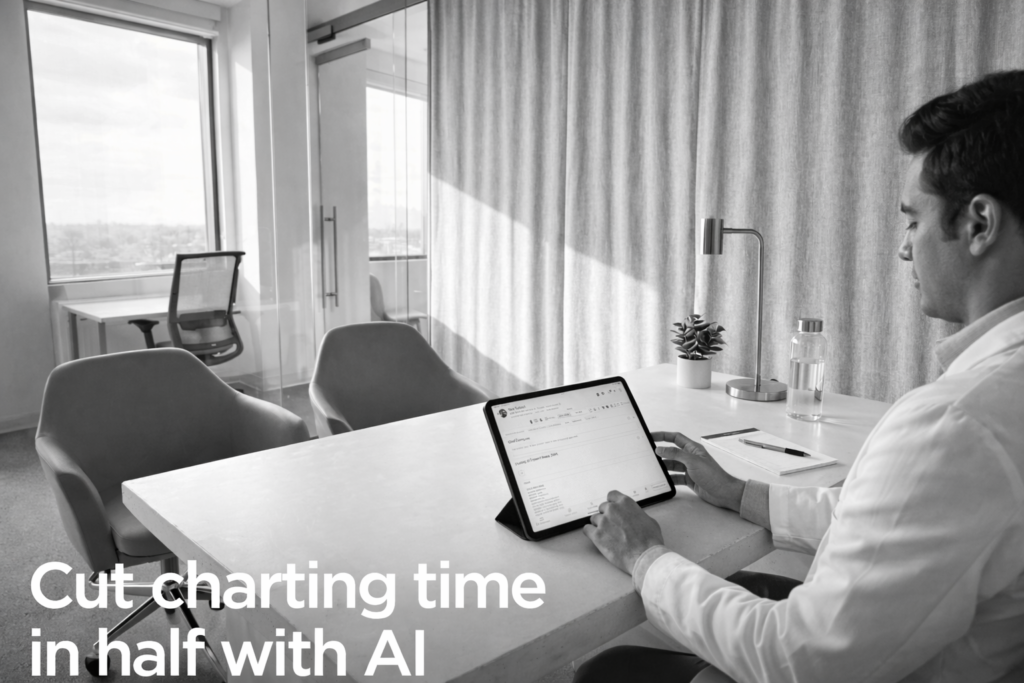
AI powered tools such as ambient charting and predictive charting can significantly reduce documentation time and physician burnout.

3. Value Based Care Support

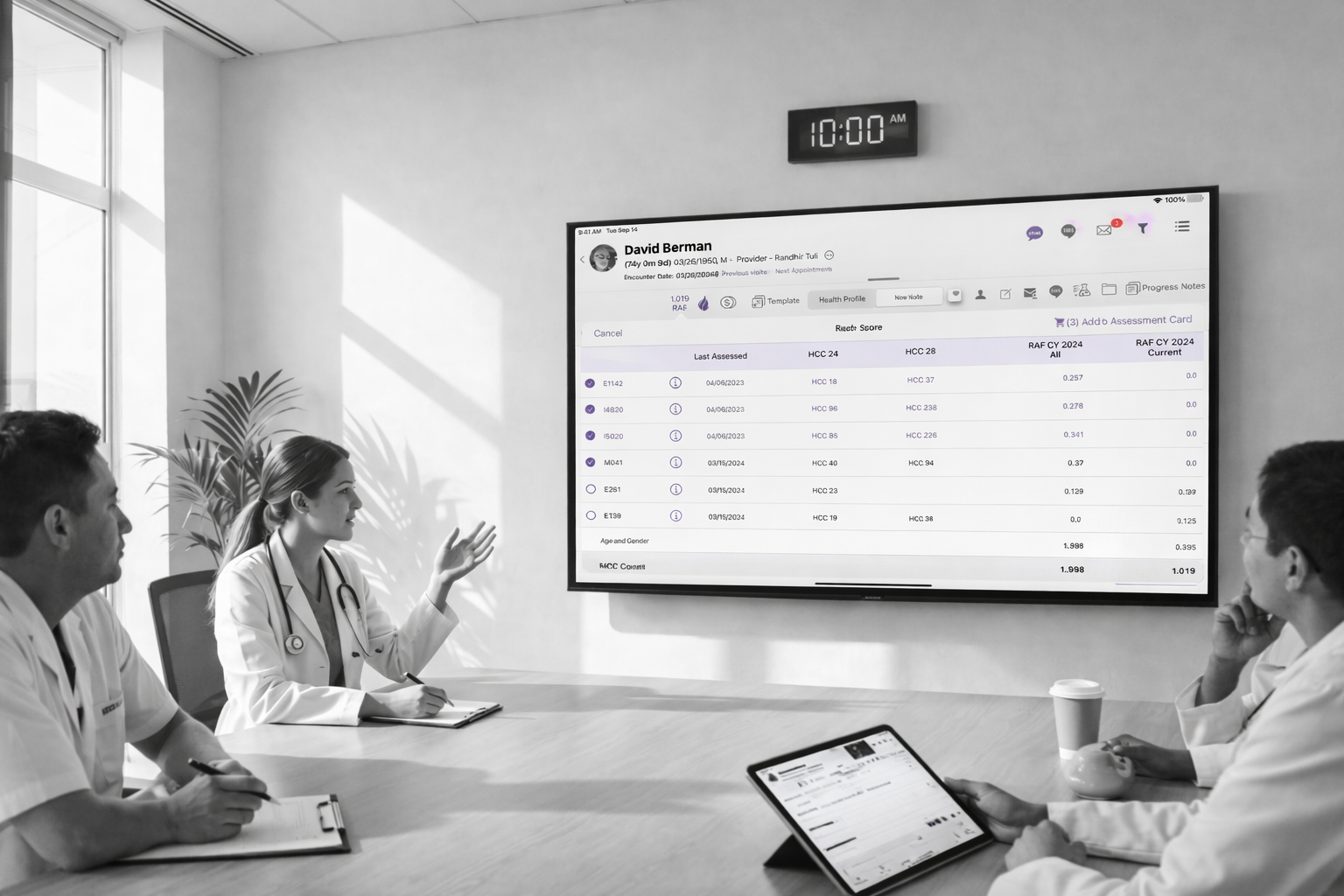
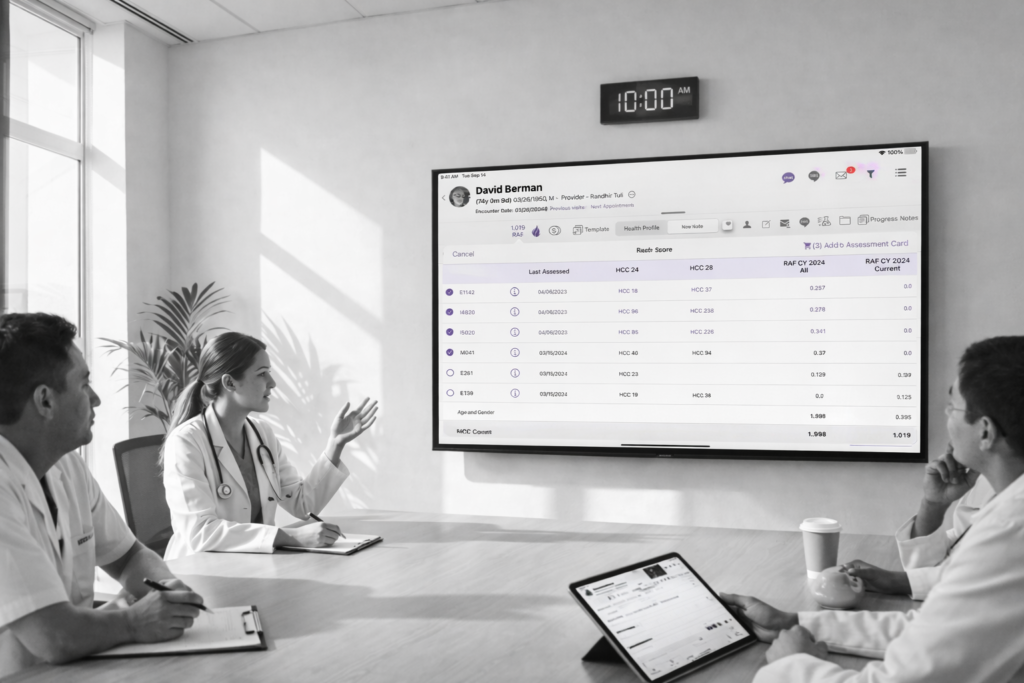
Look for features that help identify care gaps, track RAF Scores, and improve HCC coding accuracy.

4. Interoperability

Seamless integration with labs, radiology, pharmacies, and health information exchanges is critical.

5. Patient Engagement Tools

Patient portals, automated notifications, and digital communication improve patient satisfaction and reduce administrative workload.

6. Transparent Pricing and Flexibility

Avoid systems with hidden fees or restrictive contracts. Look for vendors offering flexible onboarding and risk free switching options.

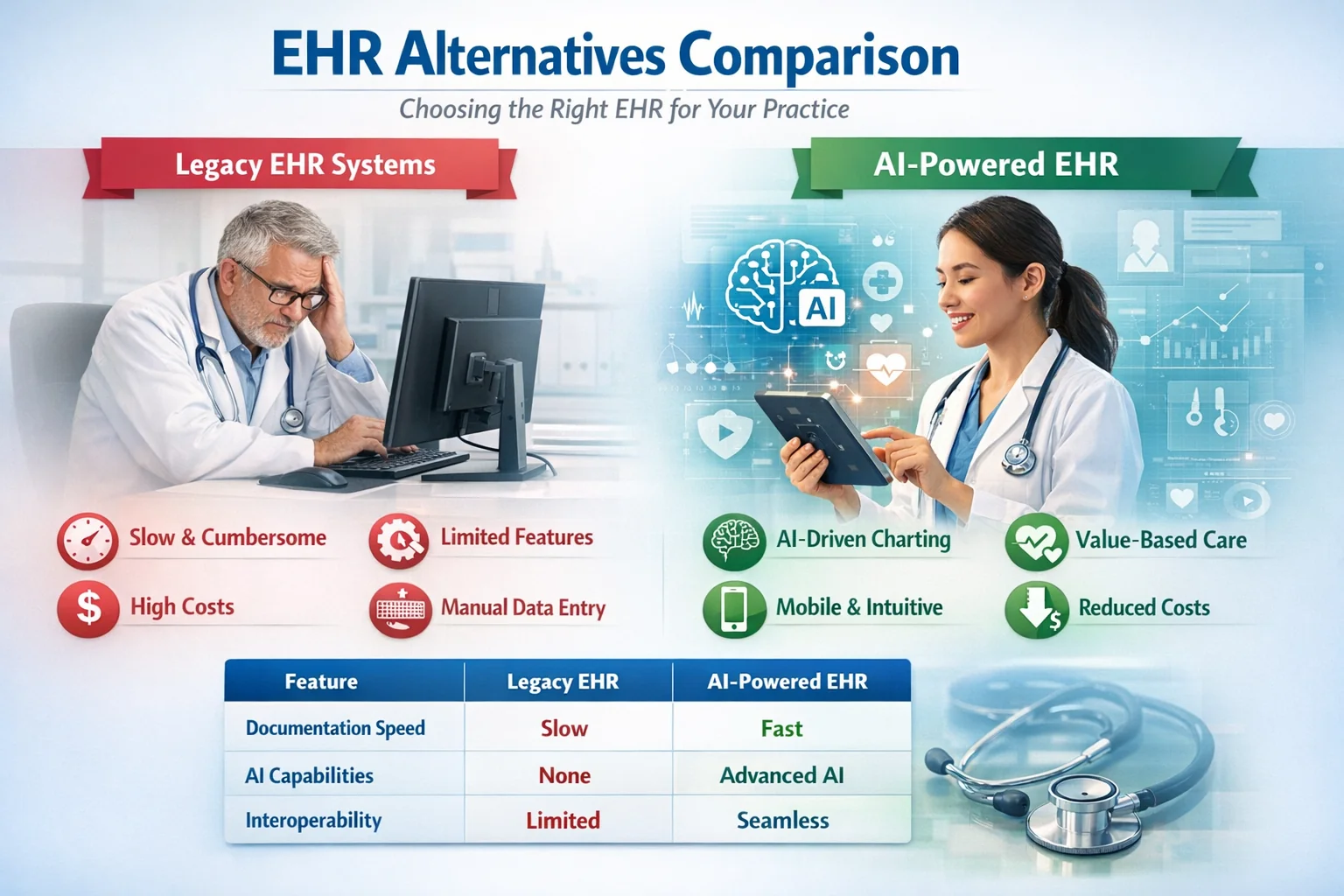
EHR Comparison Table

Below is a simplified comparison of common EHR categories to help guide your decision.

Feature Legacy EHR Systems Cloud Based EHR AI Powered EHR
User Experience Complex and outdated Improved Modern and intuitive
Documentation Speed Slow Moderate Fast with automation
AI Capabilities Limited Basic Advanced AI assistance
Value Based Care Tools Minimal Moderate Built in and proactive
Mobile Access Limited Available Fully optimized
Setup Costs High Moderate Often low or zero
Innovation Slow Moderate Rapid

Why AI Powered EHR Systems Are Gaining Momentum

The biggest shift in healthcare technology today is the adoption of AI powered EHR platforms.

These systems go beyond basic record keeping and actively assist providers during patient care.

Key advantages

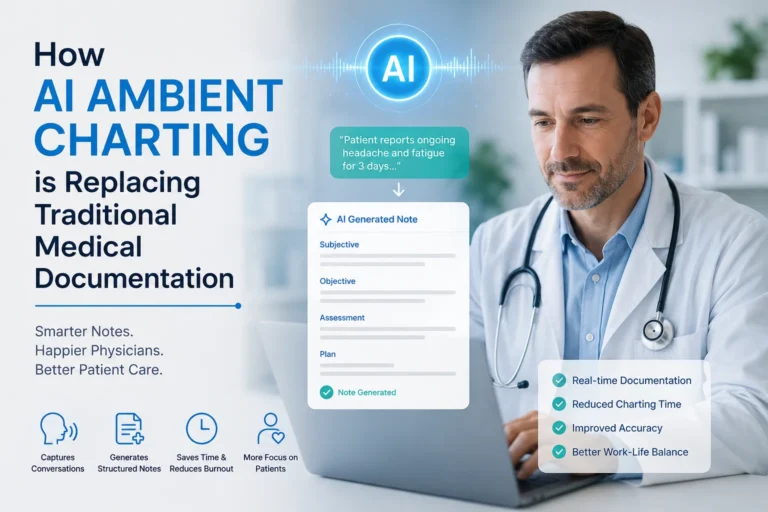
  • Ambient charting that captures visits automatically
  • Predictive suggestions for orders and treatment plans
  • AI driven insights for RAF and HCC coding
  • Faster documentation with fewer clicks
  • Improved compliance and accuracy

Practices using modern platforms are seeing measurable improvements in both efficiency and revenue.


A Modern Approach to EHR: What Sets New Platforms Apart

New generation EHR systems are designed with physicians in mind.

Instead of forcing providers to adapt to software, these platforms adapt to how clinicians work.

For example, solutions like Althea Smart EHR from MD Synergy focus on:

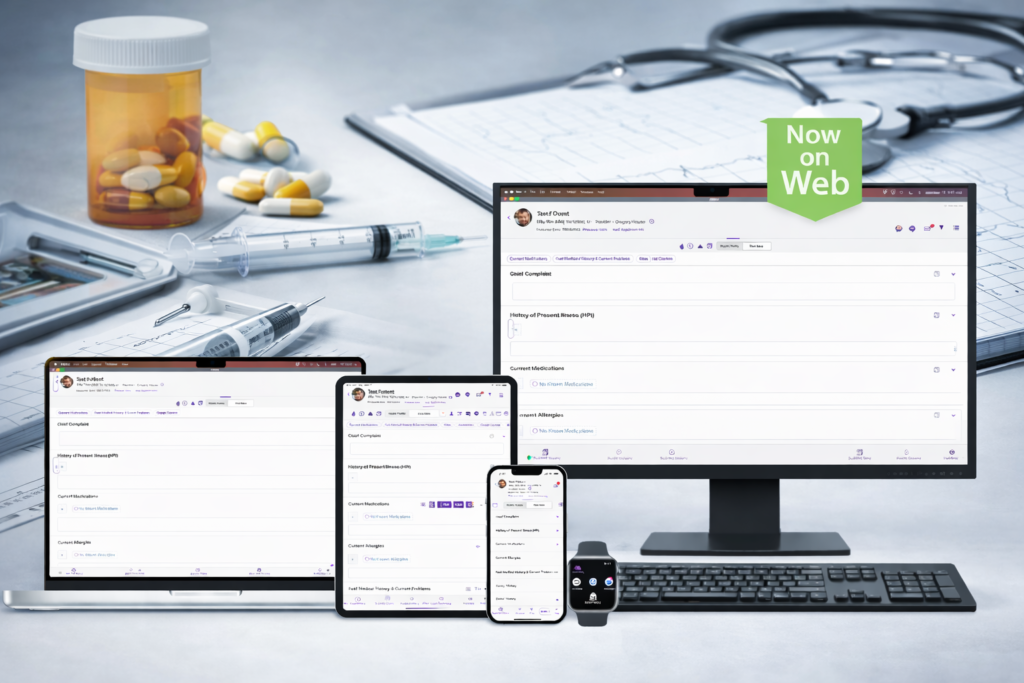
  • Mobile first workflows for iPhone and iPad
  • AI powered clinical assistance
  • Real time patient data access
  • Integrated communication tools
  • Simplified user experience inspired by consumer technology

This shift is helping practices spend more time with patients and less time on documentation.


When Should You Switch Your EHR

If your current system is holding your practice back, it may be time to consider switching.

Signs you need an EHR alternative

  • You spend more time charting than seeing patients
  • Your system does not support value based care initiatives
  • Staff productivity is declining
  • Reporting and analytics are limited
  • You are paying high fees with little return

Switching EHR systems used to be difficult, but modern vendors now offer streamlined migration processes with minimal disruption.

How to Evaluate EHR Alternatives

Before making a decision, follow a structured evaluation process.

Step by step approach

  1. Identify your practice needs and workflows
  2. Request live demos focused on real clinical scenarios
  3. Compare features that impact efficiency and revenue
  4. Review total cost including hidden fees
  5. Ask about Data Migration and onboarding support
  6. Speak with current users for real feedback

Taking the time to evaluate properly can prevent costly mistakes.


Conclusion

The EHR landscape is evolving rapidly. Practices that continue using outdated systems risk falling behind in both efficiency and patient care.

Exploring EHR alternatives is not just about switching software. It is about transforming how your practice operates.

Modern AI powered platforms are helping providers reduce burnout, improve documentation accuracy, and increase revenue opportunities.

Practices that adopt the right technology today will be better positioned for the future of healthcare.

FAQ Section for SEO

What is the best EHR alternative in 2026

The best EHR alternative depends on your practice size and specialty. Many providers are choosing AI powered EHR systems that offer faster documentation, better workflows, and improved value based care support.

Why are doctors switching EHR systems

Doctors are switching due to poor usability, high costs, and lack of innovation in older systems. Modern EHR alternatives provide better efficiency and reduce administrative burden.

Are AI powered EHR systems worth it

Yes AI powered EHR systems can significantly reduce documentation time, improve coding accuracy, and enhance patient care through automation and intelligent insights.

How difficult is it to switch EHR systems

Switching used to be complex, but many modern vendors now offer free data migration, onboarding support, and minimal downtime during transition.

What features should I look for in an EHR system

Key features include ease of use, AI documentation tools, interoperability, patient engagement tools, and value based care support such as RAF and HCC tracking.

Can switching EHR improve revenue

Yes a modern EHR can improve revenue by capturing missed coding opportunities, improving billing accuracy, and increasing provider productivity.

Previous

How AI Ambient Charting Is Replacing Traditional...

Next

How AI is Transforming Pain Management Documentation

AI pain management documentation in EHR across desktop and mobile devices

Primary care practices are under increasing pressure to deliver better outcomes while maintaining financial stability. One of the most important yet often misunderstood drivers of revenue in value based care is the RAF score.

RAF scores directly influence how much Medicare Advantage plans reimburse providers. When RAF scores are accurate and properly documented, practices are compensated fairly for the complexity of care they deliver. When they are not, revenue is lost without anyone realizing it.

Understanding how RAF scores work and how to improve them is no longer optional. It is essential for any primary care practice participating in value based care.

What Is RAF Score in Healthcare

RAF stands for Risk Adjustment Factor. It is a numerical value assigned to each patient based on their documented health conditions and demographic information.

The higher the RAF score, the higher the expected cost of care. Medicare Advantage plans use this score to determine reimbursement levels for providers.

Each diagnosis tied to a Hierarchical Condition Category contributes to the RAF score. Chronic conditions such as diabetes, COPD, and heart failure play a major role in determining this value.

If these conditions are not properly documented and coded each year, the RAF score drops and so does reimbursement.

How RAF Scores Affect Primary Care Revenue

RAF scores directly control how much a practice is paid for managing patient populations under value based contracts.

Here is how it works in practice.

A patient with multiple chronic conditions requires more time, coordination, and follow up care. If all conditions are documented and coded correctly, the RAF score reflects this complexity and reimbursement increases.

If even one condition is missed or not recaptured annually, the RAF score decreases. That leads to lower payments even though the workload remains the same.

Over time, these small gaps can result in significant revenue loss across a patient panel.

Why Many Practices Lose Revenue Due to RAF Gaps

Most primary care practices are not losing revenue because they lack clinical expertise. They lose revenue because of documentation and workflow gaps.

Common issues include incomplete documentation, missed chronic conditions, and failure to recapture diagnoses annually.

Physicians are often pressed for time and focus on the immediate reason for the visit. As a result, chronic conditions that should be addressed and documented are overlooked.

Traditional EHR systems do little to support proactive RAF optimization. They rely heavily on manual entry and do not surface coding opportunities in real time.

Common Documentation Mistakes That Lower RAF Scores

Several recurring documentation issues directly impact RAF accuracy.

One of the most common is under documenting chronic conditions. For example, a patient with diabetes complications must have those complications clearly documented each year.

Another issue is lack of specificity. Vague diagnoses do not always map correctly to HCC codes, which reduces the RAF score.

Annual recapture is another major gap. Conditions must be documented every year. If they are not, they drop off the RAF calculation.

Finally, disconnected workflows between visits lead to missed opportunities. Without a clear longitudinal view of the patient, providers may not address all relevant conditions.

Real Example of RAF Impact on Revenue

Consider a primary care practice managing a Medicare Advantage patient with diabetes, hypertension, and chronic kidney disease.

If all three conditions are documented and coded properly, the RAF score reflects a higher risk profile and reimbursement increases.

If chronic kidney disease is not documented during the current year, the RAF score drops. The practice receives less compensation despite managing the same level of complexity.

Multiply this across hundreds of patients and the financial impact becomes substantial.

How to Improve RAF Scores in Primary Care

Improving RAF scores requires a combination of better documentation habits and smarter technology.

Start with structured documentation workflows that prompt providers to review chronic conditions during each visit.

Ensure that all relevant diagnoses are captured with the correct level of specificity. This improves coding accuracy and supports higher RAF scores.

Use pre visit planning to identify care gaps before the patient arrives. This allows providers to address missing diagnoses proactively.

Most importantly, leverage technology that supports real time decision making rather than relying on retrospective coding.

The Role of AI in RAF Optimization

AI powered EHR systems are changing how practices approach RAF scoring.

Instead of relying on manual review, AI can analyze patient history, identify potential HCC gaps, and suggest appropriate documentation during the visit.

This reduces the cognitive burden on physicians and improves accuracy without adding extra work.

For example, an AI powered system like Althea Smart EHR can surface relevant conditions, assist with documentation, and help ensure that no critical diagnosis is missed.

This leads to more complete charts, better compliance, and improved financial performance.

Why RAF Optimization Is Essential for Value Based Care

Value based care models are built around managing patient risk effectively. RAF scores are the foundation of this model.

Practices that fail to optimize RAF scores are at a disadvantage. They take on complex patients without receiving appropriate compensation.

On the other hand, practices that focus on accurate documentation and leverage modern tools are able to improve both patient outcomes and financial results.

RAF optimization is not just about coding. It is about aligning clinical care with financial sustainability.

FAQ: RAF Scores and Primary Care Revenue

What is a RAF score in healthcare

RAF score stands for Risk Adjustment Factor. It is a number assigned to a patient based on their documented conditions and demographics. This score determines how much Medicare Advantage plans reimburse providers for managing that patient.

Why do RAF scores matter for primary care practices

RAF scores directly impact reimbursement. Higher RAF scores reflect higher patient complexity, which leads to increased payments. If conditions are not properly documented, practices may be underpaid.

How can primary care practices improve RAF scores

Practices can improve RAF scores by ensuring accurate and complete documentation of chronic conditions, recapturing diagnoses annually, and using tools that identify gaps in care during patient visits.

What happens if RAF scores are too low

If RAF scores are too low, practices receive less reimbursement than they should. This creates financial strain, especially when managing complex patients without appropriate compensation.

How does AI help improve RAF scores

AI powered EHR systems can analyze patient data, identify missing diagnoses, and assist with real time documentation. This helps ensure that all relevant conditions are captured accurately, improving RAF scores.

Do RAF scores need to be updated every year

Yes. RAF scores reset annually. Chronic conditions must be documented each year to be included in the current RAF calculation.


Final Thoughts

RAF scores are one of the most powerful levers in primary care revenue, yet they are often overlooked.

By improving documentation practices and adopting AI driven tools, practices can close care gaps, increase reimbursement, and deliver better care.

As value based care continues to grow, understanding and optimizing RAF scores will be a defining factor in long term success.

AI pain management documentation in EHR across desktop and mobile devices
Previous

How AI is Transforming Pain Management Documentation

Next

Risk Adjustment Documentation Software That Closes HCC...

AI for risk adjustment documentation software

Documentation gaps and missed Hierarchical Condition Category codes are common hurdles for medical practices. Physicians often manage complex patient cases with limited time. This pressure leads to incomplete charts and overlooked diagnoses. The impact of these missed codes is significant. Clinics face substantial lost revenue and increased compliance risks during audits.

Implementing risk adjustment documentation software provides a clear path forward. This technology helps providers capture accurate patient acuity. By alerting clinicians to missing information during the patient visit, it ensures comprehensive record keeping. Practices can then focus on delivering excellent care while protecting their financial health.

What Are HCC Coding Gaps and Why They Matter

Hierarchical Condition Category coding gaps happen when a patient has a chronic condition that is not properly documented or billed during a specific calendar year. These gaps typically occur in two ways. First, a provider might completely miss a diagnosis during a visit. Second, the physician might note the condition in the clinical narrative but fail to add the corresponding billing code.

When chronic conditions are not captured, the patient appears healthier on paper than they actually are. This results in lower Risk Adjustment Factor scores. Lower scores directly translate to revenue loss under value-based care contracts. Furthermore, inconsistent coding between clinical notes and billed diagnoses creates significant audit risks. Health plans and Medicare require precise matching to validate payments.

Why Traditional Documentation Fails in Risk Adjustment

Traditional electronic health records often fail to support accurate risk adjustment. Most legacy systems rely entirely on manual documentation. Physicians must remember complex coding rules while actively treating patients. Time pressure in busy clinics makes this manual process incredibly difficult. A doctor seeing twenty or more patients a day simply cannot memorize every coding requirement.

Additionally, older systems lack real-time clinical prompts. They function more like digital filing cabinets than active clinical assistants. Data remains fragmented across different modules or past consultation notes. Providers must dig through old records to find historical diagnoses that need annual recapture. This constant searching wastes valuable time and increases the likelihood of human error.

What Is Risk Adjustment Documentation Software

Risk adjustment documentation software is a specialized tool designed to identify, prompt, and capture HCC conditions accurately. It acts as an intelligent assistant that reviews patient histories and highlights potential omissions.

The software works seamlessly during patient encounters. As the provider evaluates the patient, the system suggests missing diagnoses based on ongoing treatments or past medical history. This proactive approach improves documentation completeness before the encounter is even signed. Clinicians no longer have to guess if they documented a chronic condition correctly. The system guides them toward accurate coding in real time.

How It Closes HCC Coding Gaps

Modern documentation platforms use several methods to ensure comprehensive charting. They fit naturally into the clinical workflow to prevent missed opportunities.

Here is how the software actively closes coding gaps:

  • Identifies undocumented chronic conditions by scanning problem lists and medication histories.
  • Flags specific HCC gaps based on the historical data of the patient.
  • Suggests the most relevant and specific ICD codes for the documented condition.
  • Prompts providers directly during the patient visit so corrections happen immediately.
  • Ensures the annual recapture of existing conditions to maintain accurate funding levels.

By automating these checks, clinics significantly reduce the burden on their medical coding staff. The process becomes proactive rather than reactive.

Impact on RAF Scores and Revenue

Accurate documentation leads directly to better RAF scores. When a physician captures the true clinical complexity of a patient, the health plan receives a complete picture of the expected care costs.

Better RAF scores mean improved reimbursement rates for the practice. Providers are properly compensated for the heavy lifting required to manage chronic illnesses. To achieve these results, many clinics adopt RAF score optimization software. This technology removes the guesswork from value-based contracts. It guarantees that the clinic gets paid fairly for the actual level of care provided to the community.

Role of AI in Risk Adjustment Documentation

Artificial intelligence is completely changing how physicians interact with medical records. AI-assisted prompts analyze vast amounts of data instantly. They recognize patterns that a human might overlook during a rushed appointment.

Using AI for risk adjustment documentation also introduces ambient documentation capabilities. Ambient charting listens to the natural conversation between the doctor and patient. It then automatically drafts a structured clinical note. This process includes predictive insights that highlight potential coding gaps based on the spoken dialogue. Clinicians review and approve the suggestions rather than typing everything from scratch. This practical application of artificial intelligence saves hours of administrative work every week.

How MD Synergy’s Althea Smart EHR Helps

MD Synergy Solutions offers a practical way to fix documentation issues. Althea Smart EHR features built-in predictive charting and real-time HCC gap identification. These tools integrate smoothly into the daily workflow. Physicians can view alerts and code suggestions instantly.

The platform is a mobile-first EHR. Doctors can access full functionality on an iPhone or iPad. This mobility allows for easy documentation anywhere in the clinic. The platform combines EHR capabilities with an integrated practice management system that handles billing. This helps practices manage both clinical and administrative workflows in one system.

Switching to Althea is risk-free for your practice. The platform includes free data migration and zero setup, training, or support fees. There are no long-term contracts. The intuitive design means onboarding takes only about two hours. You get a powerful tool designed to reduce practice risk without the usual software headaches.

Why Primary Care Practices Need This Now

The healthcare industry is experiencing a massive shift toward value-based care. Insurance companies and Medicare increasingly tie revenue to patient outcomes and accurate risk assessment. Primary care physicians face mounting compliance pressure to prove the acuity of their patient panels.

Clinics must find ways to improve efficiency without constantly hiring more staff. Adding billing specialists or scribes is expensive and hard to manage. Upgrading to a modern EHR for primary care clinics solves this problem. It empowers existing staff to do more with less effort. Technology bridges the gap between clinical excellence and financial viability.

Transform Your Practice Documentation Today

Closing HCC coding gaps ultimately results in better patient care and better revenue for your practice. Accurate records ensure that patients receive appropriate follow-up care for all their conditions. Meanwhile, optimized documentation protects the financial foundation of your clinic. Explore how smarter documentation tools can help your practice close HCC gaps and improve financial outcomes.

RAF score and HCC coding dashboard in AI powered EHR for primary care revenue optimization
Previous

AI Powered EHR RAF Score Dashboard for...

Next

Predictive Charting EHR: Preventing Missed Diagnoses and...

Primary care physician using iPad with AI-powered predictive charting EHR for clinical documentation

Missed diagnoses and incomplete documentation represent constant threats inside busy medical clinics. Primary care physicians often rush from one exam room to another. Charting easily falls behind during hectic afternoons. Clinical documentation gaps directly impact patient health and significantly lower annual practice revenue. Industry data shows that missing chronic condition coding heavily penalizes clinics operating under modern reimbursement models. A predictive charting EHR offers a highly practical solution to solve these daily administrative challenges.

Why Missed Diagnoses Still Happen in Modern Practices

Time constraints during brief consultations force doctors to prioritize immediate complaints over comprehensive reviews. Manual documentation creates a heavy administrative burden that drains clinical energy. Fragmented patient data spread across multiple legacy systems makes seeing the complete clinical picture incredibly difficult. Coding inaccuracies frequently occur when providers rely entirely on memory at the end of a long shift.

These daily realities create serious clinical risk for patients. Chronic conditions remain unaddressed or unrecorded. This missing data creates a compounding negative financial impact for the practice. Unbilled complexity means uncompensated care. Relying on outdated manual entry methods guarantees that important clinical details will inevitably slip through the cracks.

Understanding RAF Scores and Revenue Impact

The Risk Adjustment Factor score determines patient complexity within modern healthcare models. Payers use these metrics to calculate the expected cost of caring for specific patient populations. These scores directly dictate reimbursement levels from Medicare and private insurers.

Under-documentation leads directly to artificially low scores. Missing just one chronic condition diagnosis can drastically reduce the funding needed to care for a highly complex patient over a calendar year. Using proper RAF score optimization software helps practices capture the true clinical narrative. Accurate scoring ensures the clinic secures appropriate revenue to sustain quality patient care. Ignoring these metrics puts small to mid-sized private practices at a severe financial disadvantage.

What Is Predictive Charting in EHR

Predictive charting serves as an intelligent background assistant for medical professionals. This AI-driven system automatically suggests relevant diagnoses, appropriate codes, and necessary documentation details in real time.

The technology works by thoroughly analyzing historical patient data. It identifies missing care gaps before the provider even steps into the examination room. The system then gently prompts providers during the actual patient visit. This proactive approach ensures nothing crucial gets left out before the provider officially closes the chart. Doctors receive helpful nudges to address ongoing issues rather than starting from scratch during every single appointment.

How Predictive Charting Prevents Missed Diagnoses

Busy clinicians need structural support to maintain accuracy during high-volume days. Predictive technology provides exactly that by serving as a clinical safety net.

Here is how this advanced technology prevents missed diagnoses:

  • Surfaces undocumented conditions based on previous visits and lab results
  • Flags potential diagnosis gaps while the patient remains in the exam room
  • Suggests relevant ICD codes to perfectly match the clinical narrative
  • Ensures complete patient records for better continuity of care across specialties
  • Supports clinical decision-making with context-aware prompts and reminders

How It Improves RAF Scores and Compliance

Capturing all relevant conditions accurately remains essential for a financially healthy practice. Predictive features prompt the provider to address and document chronic issues on an annual basis. This consistency improves overall documentation accuracy across the entire patient panel.

Properly detailed charts keep the clinic completely audit-ready at all times. Transitioning to a value based care EHR makes meeting strict payer requirements incredibly simple without adding hours of frustrating paperwork. Practices can align their clinical workflows with billing requirements through integrated practice management support. Clean data entry at the point of care eliminates backend coding struggles and costly claim denials entirely.

Role of AI in Clinical Documentation

Artificial intelligence quietly observes the consultation to reduce the manual typing burden placed on physicians. Ambient listening tools capture the natural conversation flowing between doctor and patient.

Automated note generation instantly creates a highly structured draft. Relying on AI clinical documentation software keeps the provider focused completely on the patient instead of staring at a computer screen. This practical technology significantly reduces physician burnout by eliminating hours of evening computer work. Practices experience faster chart closure times and happier medical staff. The focus shifts back to human connection rather than tedious data entry tasks.

How MD Synergy’s Althea Smart EHR Solves This

Althea Smart EHR integrates intelligent predictive features directly into the natural clinical workflow. Providers receive real-time documentation support on a true mobile-first platform. Doctors can access complete patient records easily via iPhone or iPad from anywhere.

The platform combines EHR capabilities with a dedicated practice management system that supports billing, along with telemedicine and a patient portal. Clinics can switch to Althea with absolutely zero setup fees and completely free data migration. The intuitive system requires an incredibly short two-hour learning curve compared to weeks of training for legacy systems. MD Synergy requires no long-term contracts. This flexibility removes all financial risk for private practices looking to upgrade their technology.

Why Practices Are Moving Toward Predictive EHR Systems

The ongoing industry shift toward value-based care requires much better technological tools. Increasing compliance pressures from insurance payers demand flawless documentation from every single provider.

Clinics desperately need to maximize operational efficiency without hiring additional billing or coding staff. Modern software handles these complex administrative demands automatically. Implementing smart technology allows doctors to remain doctors rather than functioning as highly paid data entry clerks. Private practices that adopt these tools gain a massive competitive advantage in their local markets.

Securing the Future of Your Medical Practice

Better documentation leads directly to better patient outcomes and healthier clinic revenue streams. Implementing these advanced systems now functions as a strict necessity rather than an optional technological upgrade. Efficient workflows protect both the patient and the financial viability of the clinic.

Explore how predictive charting can support your practice with smarter documentation and improved financial outcomes.

AI for risk adjustment documentation software
Previous

Risk Adjustment Documentation Software That Closes HCC...

Next

Multi Specialty EHR for Complex Workflows: Why...

Multi specialty EHR dashboard managing complex healthcare workflows across specialties

Primary care physicians face increasing pressure. Patient volumes are rising, documentation requirements are expanding, and reimbursement models are becoming more complex.

AI-powered EHR systems for primary care are emerging as an important solution. By integrating AI clinical assistants directly into the Electronic Health Record, physicians can review patient charts faster, automate documentation, and identify coding opportunities without spending hours navigating complex medical records.

Unfortunately, many traditional EHR systems still slow clinicians down rather than support them.

This challenge is felt across primary care, family medicine, internal medicine, and pain management practices, where physicians manage large volumes of complex patient data every day.

AI-powered Electronic Health Records are beginning to change the landscape.

Modern platforms introducing AI-enabled EHR systems bring intelligent clinical assistants directly into the physician workflow. These assistants help physicians understand patient data faster, document visits automatically, and identify coding opportunities.

Instead of spending hours navigating charts, providers can focus on what matters most, patient care.

Across the healthcare technology industry, companies are exploring these capabilities. For example, MD Synergy Solutions is researching AI clinical assistant functionality as part of the ongoing evolution of its Althea Smart EHR platform. The platform is being designed with a mobile-first native application architecture, recognizing that physicians increasingly need secure access to patient information directly from their mobile devices as well as the desktop.

Why Primary Care Needs AI-Driven EHR Systems

Primary care providers manage a wide range of patient conditions including chronic disease monitoring, preventive screenings, and care coordination.

This is also true for physicians practicing family medicine, internal medicine, and pain management, where patient charts often contain years of clinical data.

As a result, patient records become complex and difficult to navigate.

Traditional EHR systems require physicians to manually search through years of clinical notes, lab results, medication histories, specialist reports, and imaging studies.

AI changes this experience completely.

With an AI Clinical Assistant, physicians can instantly understand the patient’s medical history, identify risk factors, and prepare for visits without manually reviewing hundreds of data points.

The result is significant time savings, reduced burnout, and better patient care.

Key AI Features Transforming Primary Care EHRs

Chat with the Patient Chart

Imagine being able to ask your EHR questions about a patient.

With AI-powered chart interaction, physicians can type questions such as:

What medications is this patient currently taking?
Show me the last three A1C results.
What chronic conditions does this patient have?
When was the patient’s last MRI?

The AI scans the entire patient record and provides the answer immediately.

For physicians in primary care, family medicine, internal medicine, and pain management, this eliminates the need to manually search through multiple tabs or past visit notes. Important information becomes available within seconds.

AI Clinical Timeline

Patient histories are often scattered across lab results, clinical notes, imaging reports, and specialist documents.

An AI Clinical Timeline organizes this information into a clear chronological view.

This allows physicians to quickly see key diagnoses, lab trends, medication changes, procedures, and hospitalizations.

Instead of reviewing years of notes, providers can understand the patient’s medical journey within seconds.

AI Visit Preparation

Preparing for a patient visit can take several minutes per chart. When multiplied across a full clinic schedule, the time quickly adds up.

AI-powered visit preparation automatically summarizes important patient information before the visit, including active conditions, recent labs, care gaps, medication changes, and preventive care reminders.

This is particularly valuable for busy primary care and internal medicine practices managing high patient volumes.

Physicians can walk into the exam room already prepared without spending additional time reviewing the chart.

Ambient Documentation

Documentation remains one of the biggest contributors to physician burnout.

Ambient AI documentation listens to the conversation between the physician and patient during the visit and automatically generates structured clinical notes.

This technology can capture the history of present illness, review of systems, assessment and plan, and medical decision making.

Instead of typing during the visit, physicians can maintain eye contact and focus on the patient.

For specialties such as pain management and family medicine, where patient conversations are often detailed, ambient documentation can significantly reduce after-hours charting.

Intelligent Coding and RAF Detection

Accurate coding is critical for both compliance and reimbursement. However, many conditions remain undocumented or under coded.

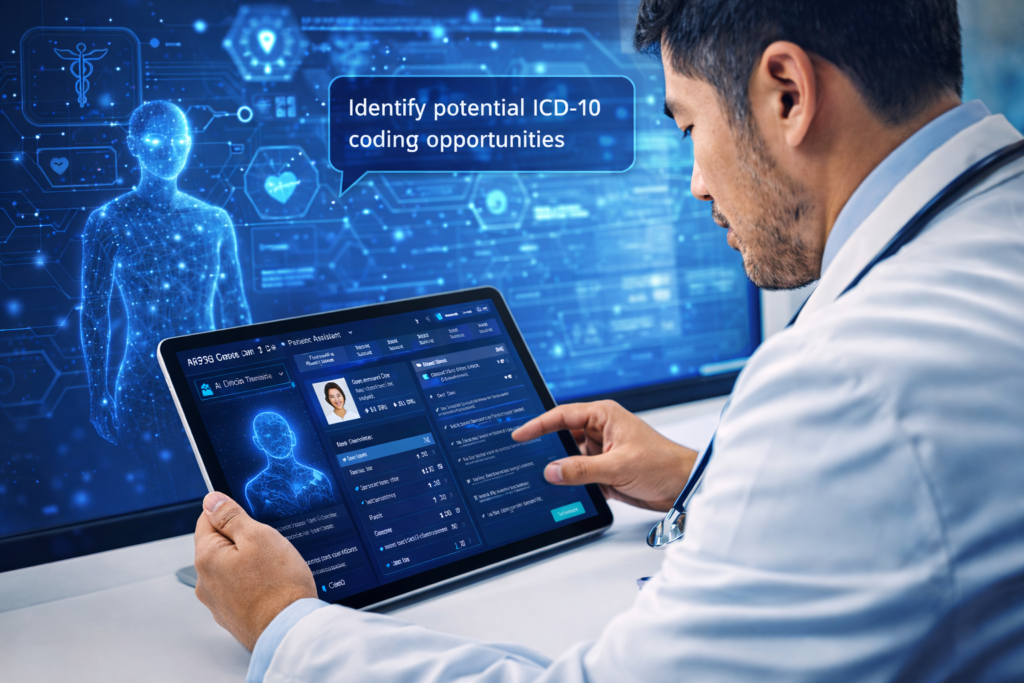
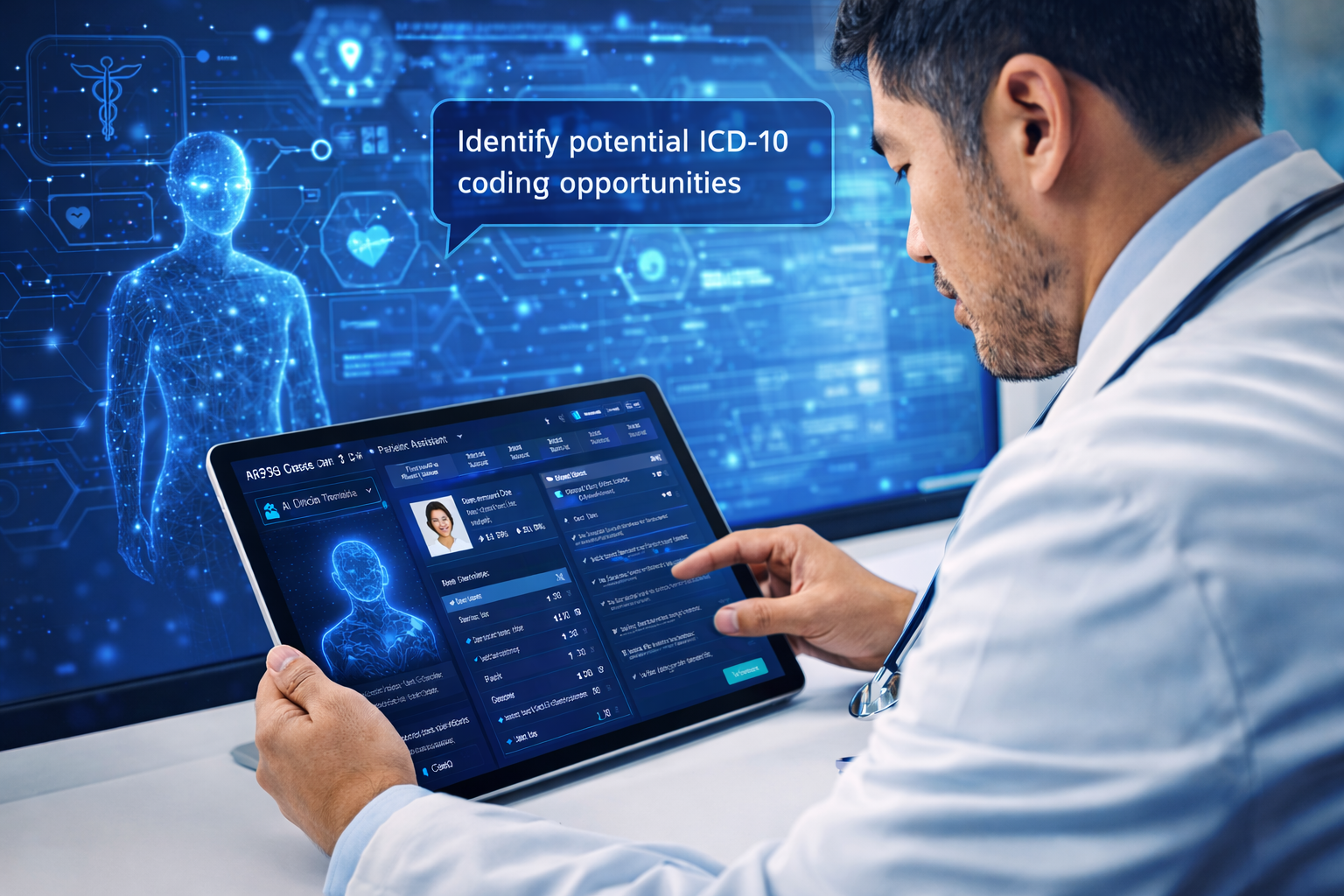
AI-powered EHR systems can analyze the patient chart and identify potential ICD-10 coding opportunities, HCC conditions, and Risk Adjustment Factor gaps.

For primary care and internal medicine practices participating in value-based care, this capability can significantly improve financial performance while ensuring accurate documentation.

Previous

AI Ambient Charting in Primary Care: Complete...

Next

AI Ambient Charting in Primary Care: How...

Primary care physician reviewing AI-generated SOAP note on iPad after patient visit using ambient charting EHR

Primary care, family medicine, and internal medicine practices rely on fast communication between physicians, staff, and patients to manage chronic conditions, coordinate referrals, and close care gaps.

However, traditional phone calls and unsecured texting create compliance risks when protected health information (PHI) is involved.

Althea Smart EHR includes built-in HIPAA-compliant mobile messaging that allows providers to securely communicate with patients and care teams directly from their iPhone or iPad — without exposing sensitive data or violating HIPAA regulations.

With secure mobile EHR messaging, practices can:

  • Coordinate care between physicians and staff
  • Follow up with chronic care patients
  • Share treatment instructions securely
  • Manage medication and lab result communication
  • Support value-based outreach initiatives tied to RAF scoring

This enables faster patient engagement while protecting PHI across all communications.


Secure Patient Communication Improves Care Coordination

Effective patient communication is essential for delivering quality care in modern healthcare settings.

Secure messaging within a mobile EHR platform helps providers manage patient interactions without relying on unsecured email, personal text messaging, or delayed phone calls. Instead of playing phone tag, care teams can respond to patient needs in real time while maintaining HIPAA compliance.

Althea Smart EHR enables providers to:

  • Communicate with patients between visits
  • Coordinate care with internal clinical staff using internal chat
  • Improve follow-up response times
  • Support medication adherence
  • Deliver appointment reminders securely

These communication tools enhance patient satisfaction while improving care coordination across the practice.


Mobile Messaging Supports Value-Based Care Communication

In value-based care models, timely communication plays a direct role in improving patient outcomes and RAF score accuracy.

Secure messaging within a mobile EHR helps practices:

  • Address documentation gaps
  • Improve chronic disease monitoring
  • Coordinate post-visit follow-ups
  • Reduce missed preventative screenings
  • Improve patient adherence to treatment plans

Althea Smart EHR allows providers to communicate securely with patients between visits, improving care coordination while supporting HCC coding accuracy and reimbursement optimization.

Practices participating in value-based reimbursement models benefit from improved documentation workflows and better communication tied to chronic condition management.


AI-Powered Mobile EHR for Modern Physician Practices

Today’s physicians need the flexibility to manage patient communication without being tied to a workstation.

Althea Smart EHR provides:

  • HIPAA-compliant mobile messaging
  • AI-powered ambient charting
  • Predictive documentation tools
  • Integrated telehealth capabilities
  • HCC coding support
  • RAF score tracking

Providers can access patient records, communicate securely, and complete documentation tasks directly from their mobile device. This mobile-first approach improves workflow efficiency while reducing administrative burden on clinical staff.


Improve Practice Workflow Efficiency with Mobile EHR Messaging

Practice efficiency is critical for managing growing patient populations while maintaining quality care standards.

HIPAA-compliant messaging within a mobile EHR platform helps reduce administrative workload by:

  • Automating patient communication
  • Supporting chronic care follow-ups
  • Improving documentation accuracy
  • Enhancing care team collaboration
  • Increasing patient engagement

By improving communication between visits, primary care and internal medicine practices can deliver better outcomes while maintaining financial performance under value-based care models.

Frequently Asked Questions (FAQ)

What is HIPAA-compliant mobile messaging?

HIPAA-compliant mobile messaging is a secure way for healthcare providers to send and receive messages that may include protected health information (PHI). It uses safeguards such as encryption, access controls, and audit trails to help prevent unauthorized access and support HIPAA compliance.

Can physicians text patients under HIPAA?

Yes, physicians can text patients under HIPAA if they use a HIPAA-compliant messaging solution that protects PHI. Standard SMS texting on personal phones is not designed for HIPAA compliance because it may not provide proper security controls, logging, or administrative safeguards.

Why is secure messaging important for primary care practices?

Primary care practices communicate frequently about lab results, medication questions, appointment reminders, referrals, and chronic condition follow-ups. Secure messaging helps reduce phone tag, improves response time, and protects patient information while improving patient engagement between visits.

Does a HIPAA-compliant messaging system need encryption?

Encryption is one of the most important security safeguards for protecting PHI during transmission and storage. While HIPAA is risk-based (not a single-technology rule), encryption is widely used to reduce risk and support compliance, especially for mobile messaging.

How does mobile messaging improve care coordination?

Mobile messaging helps care teams communicate faster, assign follow-ups, and keep patients informed between visits. It supports better coordination across physicians and staff by keeping communication organized, accessible, and secure—especially when clinical teams are not at the front desk or workstation.

How does secure messaging support Value-Based Care and RAF scores?

Value-Based Care models depend on consistent patient engagement and accurate documentation of chronic conditions. Secure messaging helps practices close care gaps, complete follow-ups, and improve chronic disease monitoring, which supports better documentation and can contribute to more accurate HCC coding and RAF score capture.

Is patient communication inside an EHR more secure than texting?

In most cases, yes. Patient communication inside an EHR can be more secure than standard texting because it can include controls like user authentication, role-based access, audit logs, message retention policies, and encrypted storage—features that typical SMS texting does not provide.

What should I look for in a HIPAA-compliant messaging platform?

Look for security and compliance features such as encryption, user authentication, role-based access, audit logs, administrative controls, and policies that support HIPAA requirements. It should also fit your workflow by making it easy for physicians and staff to communicate from mobile devices without using personal texting.

Switch EHR without data migration cost
Previous

EHR Data Migration Challenges When Switching EHR...

Next

RAF Score Explained: Improve Patient Care and...