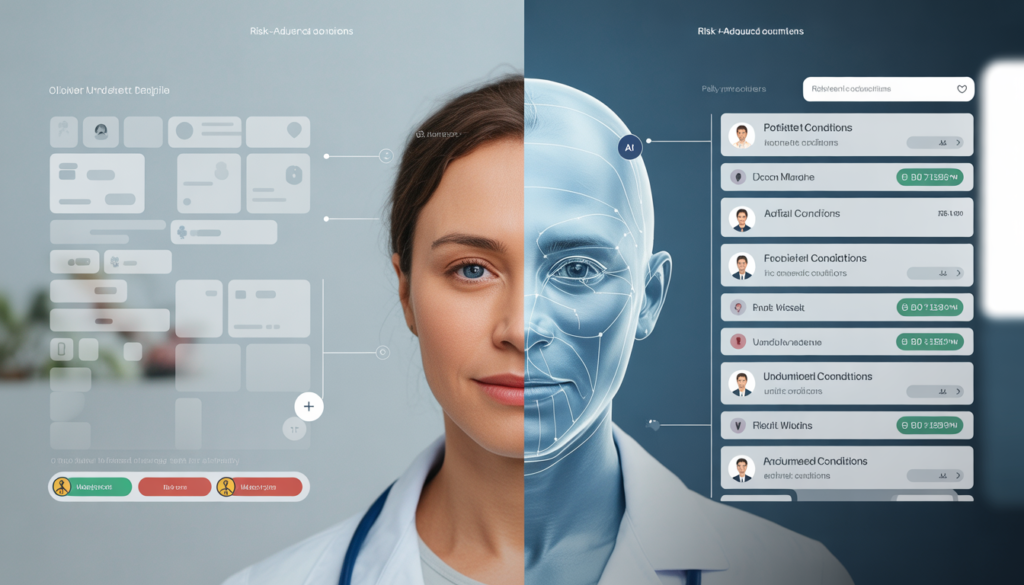
Documentation gaps and missed Hierarchical Condition Category codes are common hurdles for medical practices. Physicians often manage complex patient cases with limited time. This pressure leads to incomplete charts and overlooked diagnoses. The impact of these missed codes is significant. Clinics face substantial lost revenue and increased compliance risks during audits.

Implementing risk adjustment documentation software provides a clear path forward. This technology helps providers capture accurate patient acuity. By alerting clinicians to missing information during the patient visit, it ensures comprehensive record keeping. Practices can then focus on delivering excellent care while protecting their financial health.

What Are HCC Coding Gaps and Why They Matter

Hierarchical Condition Category coding gaps happen when a patient has a chronic condition that is not properly documented or billed during a specific calendar year. These gaps typically occur in two ways. First, a provider might completely miss a diagnosis during a visit. Second, the physician might note the condition in the clinical narrative but fail to add the corresponding billing code.

When chronic conditions are not captured, the patient appears healthier on paper than they actually are. This results in lower Risk Adjustment Factor scores. Lower scores directly translate to revenue loss under value-based care contracts. Furthermore, inconsistent coding between clinical notes and billed diagnoses creates significant audit risks. Health plans and Medicare require precise matching to validate payments.

Why Traditional Documentation Fails in Risk Adjustment

Traditional electronic health records often fail to support accurate risk adjustment. Most legacy systems rely entirely on manual documentation. Physicians must remember complex coding rules while actively treating patients. Time pressure in busy clinics makes this manual process incredibly difficult. A doctor seeing twenty or more patients a day simply cannot memorize every coding requirement.

Additionally, older systems lack real-time clinical prompts. They function more like digital filing cabinets than active clinical assistants. Data remains fragmented across different modules or past consultation notes. Providers must dig through old records to find historical diagnoses that need annual recapture. This constant searching wastes valuable time and increases the likelihood of human error.

What Is Risk Adjustment Documentation Software

Risk adjustment documentation software is a specialized tool designed to identify, prompt, and capture HCC conditions accurately. It acts as an intelligent assistant that reviews patient histories and highlights potential omissions.

The software works seamlessly during patient encounters. As the provider evaluates the patient, the system suggests missing diagnoses based on ongoing treatments or past medical history. This proactive approach improves documentation completeness before the encounter is even signed. Clinicians no longer have to guess if they documented a chronic condition correctly. The system guides them toward accurate coding in real time.

How It Closes HCC Coding Gaps

Modern documentation platforms use several methods to ensure comprehensive charting. They fit naturally into the clinical workflow to prevent missed opportunities.

Here is how the software actively closes coding gaps:

  • Identifies undocumented chronic conditions by scanning problem lists and medication histories.
  • Flags specific HCC gaps based on the historical data of the patient.
  • Suggests the most relevant and specific ICD codes for the documented condition.
  • Prompts providers directly during the patient visit so corrections happen immediately.
  • Ensures the annual recapture of existing conditions to maintain accurate funding levels.

By automating these checks, clinics significantly reduce the burden on their medical coding staff. The process becomes proactive rather than reactive.

Impact on RAF Scores and Revenue

Accurate documentation leads directly to better RAF scores. When a physician captures the true clinical complexity of a patient, the health plan receives a complete picture of the expected care costs.

Better RAF scores mean improved reimbursement rates for the practice. Providers are properly compensated for the heavy lifting required to manage chronic illnesses. To achieve these results, many clinics adopt RAF score optimization software. This technology removes the guesswork from value-based contracts. It guarantees that the clinic gets paid fairly for the actual level of care provided to the community.

Role of AI in Risk Adjustment Documentation

Artificial intelligence is completely changing how physicians interact with medical records. AI-assisted prompts analyze vast amounts of data instantly. They recognize patterns that a human might overlook during a rushed appointment.

Using AI for risk adjustment documentation also introduces ambient documentation capabilities. Ambient charting listens to the natural conversation between the doctor and patient. It then automatically drafts a structured clinical note. This process includes predictive insights that highlight potential coding gaps based on the spoken dialogue. Clinicians review and approve the suggestions rather than typing everything from scratch. This practical application of artificial intelligence saves hours of administrative work every week.

How MD Synergy’s Althea Smart EHR Helps

MD Synergy Solutions offers a practical way to fix documentation issues. Althea Smart EHR features built-in predictive charting and real-time HCC gap identification. These tools integrate smoothly into the daily workflow. Physicians can view alerts and code suggestions instantly.

The platform is a mobile-first EHR. Doctors can access full functionality on an iPhone or iPad. This mobility allows for easy documentation anywhere in the clinic. The platform combines EHR capabilities with an integrated practice management system that handles billing. This helps practices manage both clinical and administrative workflows in one system.

Switching to Althea is risk-free for your practice. The platform includes free data migration and zero setup, training, or support fees. There are no long-term contracts. The intuitive design means onboarding takes only about two hours. You get a powerful tool designed to reduce practice risk without the usual software headaches.

Why Primary Care Practices Need This Now

The healthcare industry is experiencing a massive shift toward value-based care. Insurance companies and Medicare increasingly tie revenue to patient outcomes and accurate risk assessment. Primary care physicians face mounting compliance pressure to prove the acuity of their patient panels.

Clinics must find ways to improve efficiency without constantly hiring more staff. Adding billing specialists or scribes is expensive and hard to manage. Upgrading to a modern EHR for primary care clinics solves this problem. It empowers existing staff to do more with less effort. Technology bridges the gap between clinical excellence and financial viability.

Transform Your Practice Documentation Today

Closing HCC coding gaps ultimately results in better patient care and better revenue for your practice. Accurate records ensure that patients receive appropriate follow-up care for all their conditions. Meanwhile, optimized documentation protects the financial foundation of your clinic. Explore how smarter documentation tools can help your practice close HCC gaps and improve financial outcomes.

Primary care physician using iPad with AI-powered predictive charting EHR for clinical documentation
Previous

Predictive Charting EHR: Preventing Missed Diagnoses and...

Next

AI Powered EHR RAF Score Dashboard for...

RAF score and HCC coding dashboard in AI powered EHR for primary care revenue optimization

Missed diagnoses and incomplete documentation represent constant threats inside busy medical clinics. Primary care physicians often rush from one exam room to another. Charting easily falls behind during hectic afternoons. Clinical documentation gaps directly impact patient health and significantly lower annual practice revenue. Industry data shows that missing chronic condition coding heavily penalizes clinics operating under modern reimbursement models. A predictive charting EHR offers a highly practical solution to solve these daily administrative challenges.

Why Missed Diagnoses Still Happen in Modern Practices

Time constraints during brief consultations force doctors to prioritize immediate complaints over comprehensive reviews. Manual documentation creates a heavy administrative burden that drains clinical energy. Fragmented patient data spread across multiple legacy systems makes seeing the complete clinical picture incredibly difficult. Coding inaccuracies frequently occur when providers rely entirely on memory at the end of a long shift.

These daily realities create serious clinical risk for patients. Chronic conditions remain unaddressed or unrecorded. This missing data creates a compounding negative financial impact for the practice. Unbilled complexity means uncompensated care. Relying on outdated manual entry methods guarantees that important clinical details will inevitably slip through the cracks.

Understanding RAF Scores and Revenue Impact

The Risk Adjustment Factor score determines patient complexity within modern healthcare models. Payers use these metrics to calculate the expected cost of caring for specific patient populations. These scores directly dictate reimbursement levels from Medicare and private insurers.

Under-documentation leads directly to artificially low scores. Missing just one chronic condition diagnosis can drastically reduce the funding needed to care for a highly complex patient over a calendar year. Using proper RAF score optimization software helps practices capture the true clinical narrative. Accurate scoring ensures the clinic secures appropriate revenue to sustain quality patient care. Ignoring these metrics puts small to mid-sized private practices at a severe financial disadvantage.

What Is Predictive Charting in EHR

Predictive charting serves as an intelligent background assistant for medical professionals. This AI-driven system automatically suggests relevant diagnoses, appropriate codes, and necessary documentation details in real time.

The technology works by thoroughly analyzing historical patient data. It identifies missing care gaps before the provider even steps into the examination room. The system then gently prompts providers during the actual patient visit. This proactive approach ensures nothing crucial gets left out before the provider officially closes the chart. Doctors receive helpful nudges to address ongoing issues rather than starting from scratch during every single appointment.

How Predictive Charting Prevents Missed Diagnoses

Busy clinicians need structural support to maintain accuracy during high-volume days. Predictive technology provides exactly that by serving as a clinical safety net.

Here is how this advanced technology prevents missed diagnoses:

  • Surfaces undocumented conditions based on previous visits and lab results
  • Flags potential diagnosis gaps while the patient remains in the exam room
  • Suggests relevant ICD codes to perfectly match the clinical narrative
  • Ensures complete patient records for better continuity of care across specialties
  • Supports clinical decision-making with context-aware prompts and reminders

How It Improves RAF Scores and Compliance

Capturing all relevant conditions accurately remains essential for a financially healthy practice. Predictive features prompt the provider to address and document chronic issues on an annual basis. This consistency improves overall documentation accuracy across the entire patient panel.

Properly detailed charts keep the clinic completely audit-ready at all times. Transitioning to a value based care EHR makes meeting strict payer requirements incredibly simple without adding hours of frustrating paperwork. Practices can align their clinical workflows with billing requirements through integrated practice management support. Clean data entry at the point of care eliminates backend coding struggles and costly claim denials entirely.

Role of AI in Clinical Documentation

Artificial intelligence quietly observes the consultation to reduce the manual typing burden placed on physicians. Ambient listening tools capture the natural conversation flowing between doctor and patient.

Automated note generation instantly creates a highly structured draft. Relying on AI clinical documentation software keeps the provider focused completely on the patient instead of staring at a computer screen. This practical technology significantly reduces physician burnout by eliminating hours of evening computer work. Practices experience faster chart closure times and happier medical staff. The focus shifts back to human connection rather than tedious data entry tasks.

How MD Synergy’s Althea Smart EHR Solves This

Althea Smart EHR integrates intelligent predictive features directly into the natural clinical workflow. Providers receive real-time documentation support on a true mobile-first platform. Doctors can access complete patient records easily via iPhone or iPad from anywhere.

The platform combines EHR capabilities with a dedicated practice management system that supports billing, along with telemedicine and a patient portal. Clinics can switch to Althea with absolutely zero setup fees and completely free data migration. The intuitive system requires an incredibly short two-hour learning curve compared to weeks of training for legacy systems. MD Synergy requires no long-term contracts. This flexibility removes all financial risk for private practices looking to upgrade their technology.

Why Practices Are Moving Toward Predictive EHR Systems

The ongoing industry shift toward value-based care requires much better technological tools. Increasing compliance pressures from insurance payers demand flawless documentation from every single provider.

Clinics desperately need to maximize operational efficiency without hiring additional billing or coding staff. Modern software handles these complex administrative demands automatically. Implementing smart technology allows doctors to remain doctors rather than functioning as highly paid data entry clerks. Private practices that adopt these tools gain a massive competitive advantage in their local markets.

Securing the Future of Your Medical Practice

Better documentation leads directly to better patient outcomes and healthier clinic revenue streams. Implementing these advanced systems now functions as a strict necessity rather than an optional technological upgrade. Efficient workflows protect both the patient and the financial viability of the clinic.

Explore how predictive charting can support your practice with smarter documentation and improved financial outcomes.

Multi specialty EHR dashboard managing complex healthcare workflows across specialties
Previous

Multi Specialty EHR for Complex Workflows: Why...

Next

Risk Adjustment Documentation Software That Closes HCC...

AI for risk adjustment documentation software