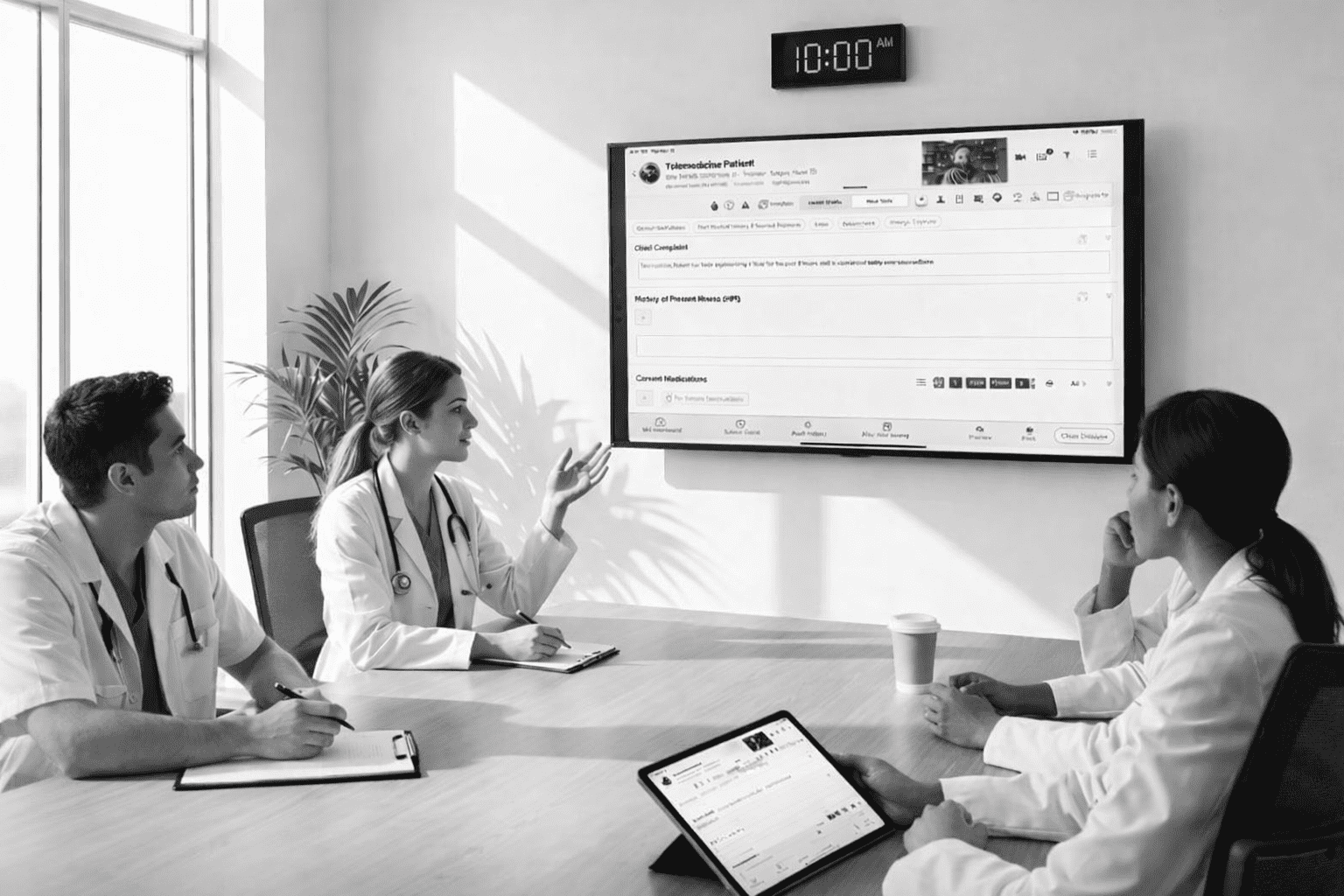
Switching Electronic Health Record (EHR) systems gives healthcare organizations an opportunity to improve efficiency and streamline clinical workflows. Many practices move away from legacy systems in order to adopt modern healthcare technology solutions. In addition, newer cloud-based EHR platforms offer AI-powered documentation tools and improved interoperability. They also provide mobile access to patient records through devices such as the iPhone and iPad.

Modern EHR platforms now include clinical automation and real-time data access. Furthermore, mobility solutions such as native mobile applications, like those available in MD Synergy’s Althea Smart EHR, support flexible clinical workflows. These platforms allow providers to access patient information from mobile devices as well as through a web browser.

However, many healthcare practices find that transitioning from one EHR platform to another can become more complex than expected. In particular, patient data transfer often presents the biggest challenge during the transition process.


Why Healthcare Practices Choose to Switch EHR Systems

Healthcare organizations often switch EHR vendors to adopt modern healthcare technology and improve interoperability. For example, AI-enabled clinical documentation tools help streamline charting and improve workflow efficiency. In addition, cloud-based EHR platforms provide real-time access to patient records.

Mobile accessibility also allows clinicians to review patient information from remote locations. As a result, these features help support clinical workflows both inside and outside of the office setting.


Challenges When Switching EHR Vendors

Practices may encounter several barriers when they switch EHR vendors. In many cases, patient data access and clinical data transfer create challenges during EHR migration.

Common challenges include:

  • EHR data export fees
  • Limited structured clinical data formats
  • Delays in receiving complete patient records
  • Per-chart or per-patient data extraction charges
  • Technical limitations in transferring historical documentation

Therefore, these issues can increase the cost and complexity of an EHR transition. They may also disrupt clinical workflows if practices do not address them early.


Training and Learning Curve During EHR Implementation

Healthcare practices must also consider the time required for clinicians and administrative staff to learn a new EHR system.

A new electronic health record platform may require:

  • Staff training sessions
  • Workflow adjustments
  • Clinical documentation changes
  • Scheduling and billing updates
  • Familiarity with new user interfaces

In many cases, providers and staff may need several days or weeks to feel comfortable using a new system. As a result, some practices temporarily reduce patient schedules during the onboarding period. This allows clinicians and staff to adapt to new workflows and documentation processes.

However, modern EHR platforms now focus on usability and mobility to reduce training time. For example, MD Synergy’s Althea Smart EHR offers a native mobile application for devices like the iPhone and iPad. Additionally, it provides access through a web browser. Many users learn core system functions within a few hours instead of several days or weeks. Therefore, this shorter learning curve may allow practices to maintain their regular patient schedules on go-live day.

Consequently, a reduced learning curve helps healthcare organizations resume normal operations quickly. It also minimizes workflow disruptions for clinical and administrative teams.


Understanding EHR Data Ownership and Access

Many providers believe they can easily transfer patient records to a new EHR platform because the data originates within their practice.

Federal guidance highlights the importance of healthcare interoperability and patient access to electronic health information. The Office of the National Coordinator for Health Information Technology (ONC) promotes initiatives that improve secure data exchange between healthcare technology systems.

Even so, practices may still face logistical or administrative challenges when requesting a complete patient data export.


Does EHR Certification Guarantee Easy Data Migration?

Many EHR vendors highlight certification credentials from organizations such as the Certification Commission for Health Information Technology (CCHIT) or ONC Certified Health IT programs.

Although certification confirms that a system meets certain functional standards, it does not guarantee:

  • Affordable EHR data export policies
  • Comprehensive patient data migration support
  • Structured clinical documentation availability
  • Compatibility with other EHR platforms

Therefore, healthcare organizations should evaluate EHR data migration policies separately from certification status.


Questions to Ask Before Signing an EHR Contract

Healthcare organizations that plan to switch EHR vendors should ask:

  • Are there fees associated with EHR data export?
  • Will the vendor provide a full patient database export?
  • What file formats will clinical data use?
  • Do exports include structured notes and medication lists?
  • Will the vendor assist with migration?
  • How long will the vendor retain patient records after termination?

These questions can help reduce unexpected costs and minimize disruptions during EHR migration.


Supporting a Smooth Transition to a New EHR System

Healthcare technology should promote interoperability and continuity of care.

A modern EHR platform should provide:

  • Transparent patient data export policies
  • Affordable EHR migration support
  • Structured clinical data delivery
  • Minimal disruption to patient care

Ultimately, switching EHR systems should improve operational efficiency. It should not introduce unnecessary administrative challenges.

At MD Synergy’s Althea Smart EHR, we believe healthcare providers should always access their patient data in a usable format that supports continuity of care.


Frequently Asked Questions About Switching EHR Systems

What is EHR data migration?

EHR data migration transfers patient records and clinical documentation from one electronic health record system to another.


Why is patient data migration important when switching EHR systems?

Healthcare providers rely on complete patient histories to support ongoing patient care and decision-making.


Are there fees associated with EHR data export?

Export policies vary between systems. In some cases, platforms include administrative procedures for patient record migration.


Does EHR certification guarantee easy data transfer?

Certification confirms functional standards. However, it does not address migration timelines or system compatibility.


How can practices prepare for switching EHR vendors?

Healthcare organizations should review vendor policies related to data export procedures and migration timelines.


Can delays in accessing patient data affect clinical workflows?

Providers rely on timely access to patient records. Therefore, delays may affect documentation and scheduling processes.


Planning ahead for EHR data migration helps practices reduce disruptions and maintain continuity of care.

Previous

HIPAA-Compliant Mobile Messaging for Primary Care | Althea Smart...

Next

Primary Care EHR Software Built for Real-World...

Primary care physician reviewing patient data and EHR dashboard on iPad in modern clinic office

Primary care, family medicine, and internal medicine practices rely on fast communication between physicians, staff, and patients to manage chronic conditions, coordinate referrals, and close care gaps.

However, traditional phone calls and unsecured texting create compliance risks when protected health information (PHI) is involved.

Althea Smart EHR includes built-in HIPAA-compliant mobile messaging that allows providers to securely communicate with patients and care teams directly from their iPhone or iPad — without exposing sensitive data or violating HIPAA regulations.

With secure mobile EHR messaging, practices can:

  • Coordinate care between physicians and staff
  • Follow up with chronic care patients
  • Share treatment instructions securely
  • Manage medication and lab result communication
  • Support value-based outreach initiatives tied to RAF scoring

This enables faster patient engagement while protecting PHI across all communications.


Secure Patient Communication Improves Care Coordination

Effective patient communication is essential for delivering quality care in modern healthcare settings.

Secure messaging within a mobile EHR platform helps providers manage patient interactions without relying on unsecured email, personal text messaging, or delayed phone calls. Instead of playing phone tag, care teams can respond to patient needs in real time while maintaining HIPAA compliance.

Althea Smart EHR enables providers to:

  • Communicate with patients between visits
  • Coordinate care with internal clinical staff using internal chat
  • Improve follow-up response times
  • Support medication adherence
  • Deliver appointment reminders securely

These communication tools enhance patient satisfaction while improving care coordination across the practice.


Mobile Messaging Supports Value-Based Care Communication

In value-based care models, timely communication plays a direct role in improving patient outcomes and RAF score accuracy.

Secure messaging within a mobile EHR helps practices:

  • Address documentation gaps
  • Improve chronic disease monitoring
  • Coordinate post-visit follow-ups
  • Reduce missed preventative screenings
  • Improve patient adherence to treatment plans

Althea Smart EHR allows providers to communicate securely with patients between visits, improving care coordination while supporting HCC coding accuracy and reimbursement optimization.

Practices participating in value-based reimbursement models benefit from improved documentation workflows and better communication tied to chronic condition management.


AI-Powered Mobile EHR for Modern Physician Practices

Today’s physicians need the flexibility to manage patient communication without being tied to a workstation.

Althea Smart EHR provides:

  • HIPAA-compliant mobile messaging
  • AI-powered ambient charting
  • Predictive documentation tools
  • Integrated telehealth capabilities
  • HCC coding support
  • RAF score tracking

Providers can access patient records, communicate securely, and complete documentation tasks directly from their mobile device. This mobile-first approach improves workflow efficiency while reducing administrative burden on clinical staff.


Improve Practice Workflow Efficiency with Mobile EHR Messaging

Practice efficiency is critical for managing growing patient populations while maintaining quality care standards.

HIPAA-compliant messaging within a mobile EHR platform helps reduce administrative workload by:

  • Automating patient communication
  • Supporting chronic care follow-ups
  • Improving documentation accuracy
  • Enhancing care team collaboration
  • Increasing patient engagement

By improving communication between visits, primary care and internal medicine practices can deliver better outcomes while maintaining financial performance under value-based care models.

Frequently Asked Questions (FAQ)

What is HIPAA-compliant mobile messaging?

HIPAA-compliant mobile messaging is a secure way for healthcare providers to send and receive messages that may include protected health information (PHI). It uses safeguards such as encryption, access controls, and audit trails to help prevent unauthorized access and support HIPAA compliance.

Can physicians text patients under HIPAA?

Yes, physicians can text patients under HIPAA if they use a HIPAA-compliant messaging solution that protects PHI. Standard SMS texting on personal phones is not designed for HIPAA compliance because it may not provide proper security controls, logging, or administrative safeguards.

Why is secure messaging important for primary care practices?

Primary care practices communicate frequently about lab results, medication questions, appointment reminders, referrals, and chronic condition follow-ups. Secure messaging helps reduce phone tag, improves response time, and protects patient information while improving patient engagement between visits.

Does a HIPAA-compliant messaging system need encryption?

Encryption is one of the most important security safeguards for protecting PHI during transmission and storage. While HIPAA is risk-based (not a single-technology rule), encryption is widely used to reduce risk and support compliance, especially for mobile messaging.

How does mobile messaging improve care coordination?

Mobile messaging helps care teams communicate faster, assign follow-ups, and keep patients informed between visits. It supports better coordination across physicians and staff by keeping communication organized, accessible, and secure—especially when clinical teams are not at the front desk or workstation.

How does secure messaging support Value-Based Care and RAF scores?

Value-Based Care models depend on consistent patient engagement and accurate documentation of chronic conditions. Secure messaging helps practices close care gaps, complete follow-ups, and improve chronic disease monitoring, which supports better documentation and can contribute to more accurate HCC coding and RAF score capture.

Is patient communication inside an EHR more secure than texting?

In most cases, yes. Patient communication inside an EHR can be more secure than standard texting because it can include controls like user authentication, role-based access, audit logs, message retention policies, and encrypted storage—features that typical SMS texting does not provide.

What should I look for in a HIPAA-compliant messaging platform?

Look for security and compliance features such as encryption, user authentication, role-based access, audit logs, administrative controls, and policies that support HIPAA requirements. It should also fit your workflow by making it easy for physicians and staff to communicate from mobile devices without using personal texting.

Previous

RAF Score Explained: Improve Patient Care and...

Next

EHR Data Migration Challenges When Switching EHR...

Switch EHR without data migration cost

Understanding RAF Scores: Improve Patient Care and Practice Revenue

Risk adjustment plays an important role in value-based care. For physicians and medical groups, understanding the RAF score helps improve patient outcomes and reimbursement.

The RAF score, or Risk Adjustment Factor, measures how complex a patient’s medical conditions are. It uses documented diagnoses and demographic data to calculate health risk. When RAF scores are accurate, patients receive appropriate care and practices are paid fairly for managing high-risk populations.

However, many providers miss opportunities because RAF documentation can feel complicated and disconnected from daily workflows.


What Is a RAF Score?

A RAF score is a number that represents a patient’s overall health risk. The score increases when patients have chronic or serious conditions that require ongoing management.

In general, higher RAF scores mean:

  • More complex care needs
  • Greater care coordination
  • Higher reimbursement in value-based payment models

Accurate documentation is essential. Chronic conditions must be documented every year. Otherwise, they do not count toward the RAF score, even if the patient still has the condition.


Why the RAF Score Matters for Patient Care

The RAF score is not just about billing. It helps physicians identify high-risk patients who need closer monitoring and more frequent follow-ups.

As a result, care teams can:

  • Prioritize patients with multiple chronic conditions
  • Address care gaps earlier
  • Improve chronic disease management
  • Reduce avoidable hospital visits

When providers use RAF score insights, they can deliver more proactive and coordinated care.


How RAF Scores Affect Practice Revenue

RAF scores also influence financial performance in risk-adjusted and value-based care programs. Practices that treat complex patients should be reimbursed based on the true level of medical need.

In many practices, a small group of high-risk patients drives a large share of care needs and revenue. Often, around ten percent of patients with the highest RAF scores represent more than one-third of total revenue potential.

If chronic conditions are not fully documented, the RAF score drops. Consequently, reimbursement may decrease, and the patient population may appear healthier than it actually is.


Common Challenges With RAF and HCC Documentation

Even experienced physicians struggle with risk adjustment for several reasons.

For example, chronic conditions may not be re-documented every year. In addition, HCC diagnoses can be missed during busy visits. Care gaps are not always visible at the point of care. Finally, documentation may not reflect the full complexity of the patient’s health.

Because of these issues, RAF management often becomes reactive instead of proactive.


How an EHR Can Help Improve RAF Score Accuracy

Technology can make RAF score management easier during daily clinical care.

Althea Smart EHR helps practices identify high-risk patients, highlight possible missed HCC conditions, and flag care gaps before claims are submitted. Therefore, providers can focus on patient care while improving documentation accuracy.

By bringing RAF score insights into the workflow, practices strengthen both clinical quality and financial performance without adding extra administrative work.


Better RAF Score Management Supports Value-Based Care

Accurate RAF score documentation aligns patient care with reimbursement. It ensures physicians are supported for managing complex patients and helps practices succeed in value-based contracts.

When risk adjustment is handled correctly, practices can improve outcomes, enhance care coordination, and build a more sustainable financial future.


Ready to Improve RAF Score Documentation?

Understanding the RAF score is the first step. Using RAF insights during patient visits is where real improvement happens.

With the right workflows and EHR support, practices can capture risk accurately, improve chronic disease management, and ensure reimbursement reflects true patient complexity.

How is your practice currently using RAF score insights to improve care and financial performance?

Previous

How AI in Healthcare Is Cutting EHR...

Next

HIPAA-Compliant Mobile Messaging for Primary Care | Althea Smart...