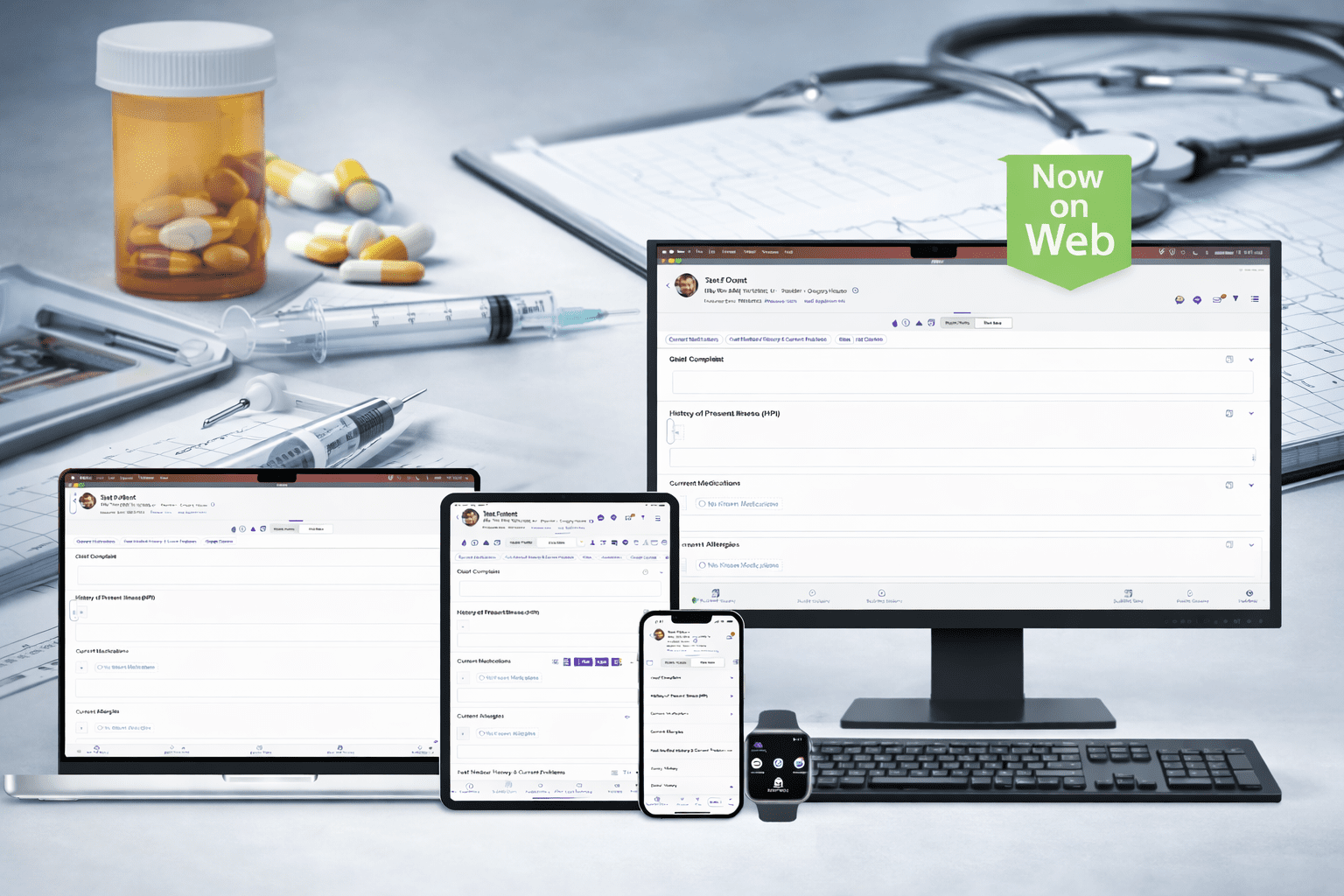
Pain Management providers face one of the most documentation-heavy workflows in healthcare. Between detailed patient histories, opioid monitoring requirements, procedure notes, and compliance standards, documentation often takes more than patient care itself. Artificial intelligence is changing that.
AI-powered documentation tools are helping pain management practices reduce administrative burden, improve accuracy, and capture more complete clinical records without adding extra work to the provider.
For clinics across California, Arizona, and Nevada, where regulatory expectations and patient volumes continue to rise, adopting AI is quickly becoming a competitive advantage.
Why Pain Management Documentation Is So Complex
Pain management documentation requires a high level of detail and consistency.
Providers must document:
- Pain location, intensity, and duration
- Functional impact on daily life
- Medication history including controlled substances
- Treatment plans and response to therapy
- Procedure details such as injections or nerve blocks
- Compliance with opioid prescribing guidelines
States like California have strict documentation and prescribing requirements, while Arizona and Nevada continue to align closely with federal opioid compliance standards. Incomplete documentation can lead to audits, denied claims, or compliance risk.
AI Ambient Charting Reduces Documentation Time
AI ambient charting listens during patient visits and converts conversations into structured clinical notes.
Instead of typing, providers can stay focused on the patient.
The system captures:
- History of present illness
- Review of systems
- Assessment and plan
- Procedure documentation
Pain management visits often involve detailed discussions about chronic symptoms and treatment responses. AI ensures nothing important is missed while reducing time spent charting.
Improving Accuracy and Consistency in Clinical Notes
AI organizes clinical conversations into structured, standardized documentation.
This helps ensure:
- Consistent note formatting
- Clear tracking of pain scores and outcomes
- Accurate treatment documentation
- Fewer missing details
Consistency is especially important in multi-provider pain management groups across states like California and Arizona where documentation quality directly impacts audits and reimbursements.
Supporting Compliance and Risk Management
Pain management practices must meet strict regulatory requirements, especially when prescribing controlled substances.
AI supports compliance by:
- Flagging missing documentation elements
- Ensuring required fields are completed
- Strengthening audit readiness
- Reducing risk of under-documentation
For clinics in highly regulated environments like California, this reduces exposure and improves confidence during audits.
Enhancing Coding and Revenue Capture
Better documentation leads to better coding.
AI systems can identify diagnoses and suggest appropriate coding based on the clinical note.
For pain management practices, this means:
- Improved capture of chronic pain conditions
- Stronger documentation for procedures
- Fewer missed billing opportunities
- Better support for medical necessity
Accurate documentation is essential for maintaining revenue, especially as payers continue to scrutinize claims more closely across the Southwest region.
AI Clinical Assistants Streamline Workflow
AI tools can also help providers prepare for visits and access patient information quickly.
They can:
- Summarize patient history
- Highlight prior treatments and outcomes
- Identify care gaps
- Assist with clinical decision-making
This is particularly valuable in pain management, where patients often have long treatment histories across multiple providers.
Better Patient Experience and Provider Satisfaction
When providers spend less time documenting, they spend more time engaging with patients.
Practices that adopt AI often see:
- Reduced burnout
- Faster workflows
- Improved patient satisfaction
- Increased provider efficiency
In pain management, where trust and communication are critical, this makes a meaningful difference.
The Future of Pain Management Documentation
AI is becoming a core part of modern pain management practices.
As technology continues to evolve, providers can expect:
- Smarter clinical insights
- Predictive treatment support
- Deeper integration with value-based-care
- Improved long-term patient outcomes
Practices in California, Arizona, and Nevada that adopt AI early are positioning themselves for stronger growth and operational efficiency.
Why It Matters Now
Pain management practices are under increasing pressure to improve documentation, maintain compliance, and protect revenue.
AI offers a practical way to achieve all three.
By reducing documentation time and improving accuracy, AI allows providers to focus on patient care while strengthening the business side of their practice.
Practices using AI-powered platforms like Althea Smart EHR from MD Synergy Solutions are already seeing improvements in documentation efficiency, compliance, and revenue performance.
Frequently Asked Questions What is AI in pain management documentation
AI in pain management documentation refers to the use of artificial intelligence to automatically capture, organize, and generate clinical notes during patient visits. It helps reduce manual charting and improves accuracy.
How does AI Ambient Charting work in pain management
AI ambient charting listens to provider and patient conversations during visits and converts them into structured medical notes such as history, assessment, and treatment plans without manual typing.
Is AI documentation compliant with healthcare regulations
Yes, AI documentation tools are designed to support compliance by ensuring required documentation elements are captured. Providers must still review and finalize notes to meet regulatory standards.
Can AI improve billing and revenue in pain management
AI improves documentation quality, which leads to more accurate coding and fewer missed billing opportunities. This can increase reimbursement and reduce claim denials.


